Let’s hope it’s not more than a simple low DO issue.
http://www.phuketnews.asia/2012/11/phuket-mass-fish-deaths-put-flood-prevention-project-on-hold/
All about Fish Vetting – Dr Richmond Loh
Let’s hope it’s not more than a simple low DO issue.
http://www.phuketnews.asia/2012/11/phuket-mass-fish-deaths-put-flood-prevention-project-on-hold/
Interested in “hooking up” with other aquatic animal health experts in an interactive webinars?
Dr Marissa McNamara will be providing an on-line demonstration of Neptune (the aquatic animal health database) at the beginning of December. The purpose of the demonstration is to show users how the database works, how to search for and enter information, etc. She will also provide a preview of the whole slide imaging site, which will be available soon in Neptune, and already contains 180 scans of the slides she has collected throughout 2012.
The demonstration will be on Wednesday the 5th of December at 2:00pm Qld time, 3:00pm NSW time, 12 noon WA time.
The demonstration will be held using Adobe Connect. To attend simply click on the link below. If you have not attended an ABIN Web Conference previously, please run the test connection link a day prior to the presentation. Audio for the presentation will be via a toll-free teleconference line, also listed below. If you do not have access to the website you can still listen to the presentation on the phone, however please do not listen to the presentation over the computer. Listeners who are calling in should mute their computer speakers. Also, listeners should mute their phones until question time if possible, as background noise is sometimes audible in the presentation.
Please feel free to invite anyone you think would be interested, and international phone numbers can be provided if necessary. Future demonstrations will be provided for anyone who cant make this one.
The Australian Toll-Free Number:
Phone Number: 1800 720 493
Participant passcode: 290 508 0292
ABIN Helpdesk (issues on the day)
Phone: 1300 136 376
Email: helpdesk@abin.org.au
ABIN Aquatic Animal Health Webinar Room (Click on this link on the day)
https://connect.abin.org.au/aquaticanimalhealth/
ABIN Test Link (Click on this link prior to the meeting to test your browser will connect to ABINconnect)
http://connect.abin.org.au/common/help/en/support/meeting_test.htm
ABIN Helpdesk (issues and trouble-shooting)
Phone: 1300 136 376
Email: helpdesk@abin.org.au
Please do not hesitate to contact me if you have any questions.
Regards,
Marissa
Dr Marissa McNamara
Scientist
Biosecurity Intelligence Unit, Biosecurity Queensland
Department of Agriculture, Fisheries and Forestry
39 Kessels Road, Coopers Plains Qld 4108
e marissa.mcnamara@daff.qld.gov.au
t 07 3276 6067
Several people have contacted me, interested in spawning their fish, maybe using hormonal induction (e.g. hCG, Ovaprim or carp pituitary extract), whether it be koi or silver perch, for example.
Some of the reasons for using hormones to induce breeding is so that you can get the right timing and the right pairings for selective breeding. Also, there is evidence to suggest that egg retention may be the cause of deaths during spawning (https://thefishvet.com/2012/01/11/egg-retention-may-be-the-cause-of-deaths-during-spawning/). Egg retention in koi may also predispose them to ovarian cancers. Hormonal induction will also maximise the fertility (hence, larger numbers of young) and it also means fewer unfertilised eggs hanging around that would otherwise attract bacteria and fungal disease. These are just some of the advantages of using hormonal induction to aid in the process of fish breeding.
The local weather has been up and down lately and even if people have had successful spawns, their fry may have suffered the recent cold shift in weather. But I’d predict that the weather from now on will be rather stable and warm and that it is a good time to spawn your fishes.
For koi, the water temperature must be able to be maintained above 21°C. Whereas, for silver perch, spawning occurs in
water temperatures of 23-30°C. Silver perch females mature in the third year at about 34cm and males mature males at 23 cm.
For a pictorial guide to using hormonal induction, see a previous post –https://thefishvet.com/2012/02/02/pictorial-guide-for-fish-breeding-using-hormones/
Clove oil (active ingredient eugenol) from the clove plant (Syzygium aromaticum). has been used for many years as an anaesthetic agent in a variety of fishes. However, the consistency of activity could vary depending on the batch. More recently, a company has refined the active ingredient and produced Aqui-S (iso-eugenol).
This paper describes another source of the eugenol – Clove Basil or African Basil (Ocimum gratissimum).
| Aquaculture | |||||||||||||||||
| Volume 353, Number 11 (June 2012) | |||||||||||||||||
 |
Essential oil of Ocimum gratissimumL.: Anesthetic effects, mechanism of action and tolerance in silver catfish, Rhamdia quelen | ||||||||||||||||
| Authors: | Lenise de Lima Silva, Thaylise Vey Parodi, Patrícia Reckziegel, Viviane de Oliveira Garcia, Marilise Escobar Bürger, Bernardo Baldisserotto, Carlos Augusto Malmann, Ana Maria Soares Pereira, Berta Maria Heinzmann | ||||||||||||||||
| Author Affiliations: |
|
||||||||||||||||
| Source: | Aquaculture, Volume 353, Number 11 (June 2012) | ||||||||||||||||
| Page Numbers: | 91 – 97 | ||||||||||||||||
| Available Full Text: |
|
||||||||||||||||
| Abstract: | The aim of this study was to determine the time until anesthetic induction and recovery in silver catfish (Rhamdia quelen) exposed to the essential oil of Ocimum gratissimumL. (EO), its potential mechanism of action via GABAergic transmission and the development of tolerance. The EO was obtained from the aerial parts of O. gratissimumL. by hydrodistillation and analyzed by gas chromatograph coupled to mass spectrometer (GC–MS). Eugenol (73.6%) and ß-bisabolene (18.3%) are the major compounds of the EO. Juvenile silver catfish were placed in aquaria containing different concentrations of the EO (10, 20, 30, 40, 50, 60, 70, 150 and 300mgL-1) to determine the point at which anesthesia was induced and the length of the recovery period. In the following experiments, the anesthetic effect of the EO (10, 20 and 40mgL-1) in association with benzodiazepine (BDZ) was determined. The GABAergic-like action and development of tolerance were assessed in fish exposed to BDZ (diazepam 150µM), EO (40mgL-1) or both EO and BDZ (EO+BDZ) at the same concentrations. After the induction of anesthesia, juveniles were transferred to an anesthetic-free aquarium containing either the classic BDZ antagonist flumazenil (5µM) or water to assess their recovery. The development of tolerance was evaluated in two experiments. In the first, juveniles were exposed to the EO twice in a 30-day interval, and in the second five exposures, weekly intervals were performed. Fish exposed to concentrations above 30mgL-1of the EO were effectively anesthetized without experiencing side effects or mortality. Fast anesthesia (<4min) could be obtained using 150 and 300mgL-1of the EO. Synergism was detected for EO+BDZ at the lower concentrations tested. Juveniles exposed to all tested drugs showed a faster recovery in flumazenil than those that recovered in water. The development of tolerance was observed in fish exposed to the EO or BDZ separately after the fifth exposure. Two exposures were sufficient to sensitize the fish to the action of these drugs. However, repeated exposure to EO+BDZ did not induce tolerance and/or sensitization. In conclusion, the EO of O. gratissimumis an effective and safe anesthetic for silver catfish, and its mechanism seems to be related to an interaction with the GABAA-benzodiazepine receptor. | ||||||||||||||||
| Citation: | Lenise de Lima Silva, Thaylise Vey Parodi, Patrícia Reckziegel, Viviane de Oliveira Garcia, Marilise Escobar Bürger, Bernardo Baldisserotto, Carlos Augusto Malmann, Ana Maria Soares Pereira, Berta Maria Heinzmann . Essential oil of Ocimum gratissimumL.: Anesthetic effects, mechanism of action and tolerance in silver catfish, Rhamdia quelen. Aquaculture, Volume 353, Number 11 (June 2012), pp. 91-97, <http://ejournals.ebsco.com/direct.asp?ArticleID=4BEE9E652C8106A7E1AC> | ||||||||||||||||
| URL: | http://ejournals.ebsco.com/direct.asp?ArticleID=4BEE9E652C8106A7E1AC | ||||||||||||||||
—
Follow me on: Facebook “Fin Page” – YouTube – Blog – Linkedin – Twitter
Dr Richmond Loh
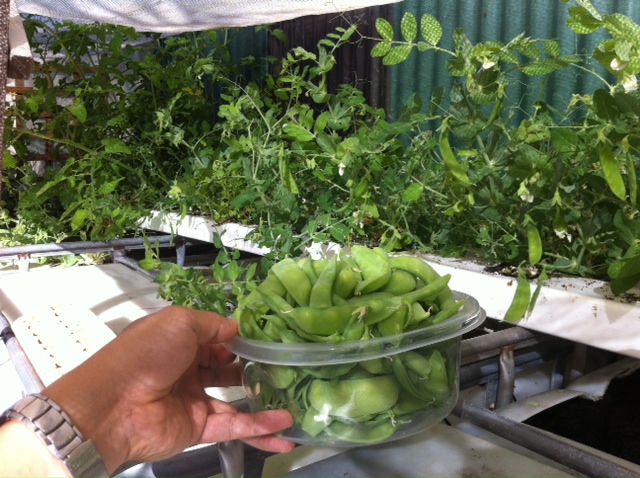
I may not have to buy any more snow peas this summer, after this morning’s harvest of 630g from my aquaponics setup. Cherry tomatoes will be next on the list as the plants are now in flower.
News received via aquatichealth.net:
Dear subscribers,
I was contacted today to ask if anyone’s able to board an Axolotl. They would require a large, cycled aquarium with a chiller unit to keep the Axolotl comfortable at 18-20 degC. Please see below for more information and contact Bianca directly:
From Bianca,
My client is flying her Axolotl named Toothless from Exmouth, WA to Perth, WA and needs it boarded between 11.12.12 and 20.01.13 where it will then fly to Townsville, QLD.
We would drop the pet off to the destination and collect him before his flight as long as it is not too far away.
The Axolotl will not have a tank or anything as it will fly in a Styrofoam box to Perth so it will all need to be supplied.
Kind Regards
Bianca Rowe
Dogtainers Perth
Postal: PO Box 799 Cloverdale 6105
Physical: 9/184 Raleigh Street, Carlisle 6101
p: 1300 13 52 52
p: +61 (08) 9355 4088
f: +61 (08) 9355 4099
e: perth@dogtainers.com.au
———- Forwarded message ———-
From: Matt Landos
Date: Mon, Nov 19, 2012 at 2:30 PM
Subject: Gladstone and Minister Burke’s deficient response to aquatic animal sicknesses
Hi All,
The lesions in aquatic animals at Gladstone are documented in my interim reports- with gross pathology and some histopath reports from Dr Michelle Dennis.
My full report has still not been released by the fund who commissioned it yet- it is complete. There is a lot of detail (& ~ 200 supportive literature references) in there about what is likely to be causing the problems, and as I said on ABC Catalyst a few weeks ago, the potential causes, when examined in detail, are all highly likely to be linked to the dredging and dredge disposal for the harbour development.
This is all taking place within a World Heritage Area. The presentation I gave to the World Heritage delegation in March is also on the weblink below.
They can be downloaded free at :
www.gladstonefishingresearchfund.org.au
In my opinion none of the disease processes defined can be adequately explained with a freshwater incursion, which Minister Burke and the Gladstone Ports Corporation (GPC) are maintaining is the cause.
http://www.alp.org.au/blogs/alp-blog/november-2012/getup-gets-facts-wrong-on-reef/
Environment Minister Tony Burke and Queensland Premier Campbell Newman are not appropriately considering the risks associated with dredging which are documented in the GHD EIS, and in recent GPC documents in relation to the second shipping channel application. No controls on sediment resuspension have been used in Gladstone- unlike the Port of Melbourne project. Hence a 34km plume of sediments has occurred (JCU satellite report available at weblink above).
Please contact Paul Oosting, at GetUp, if you are able to assist by offering a Blog statement.
My independent evidence, needs to be urgently considered. I have repeatedly offered to present the material to Qld Govt without success.
I now feature in an ad which GetUp put together from an interview I gave them in an effort to communicate the problems I and others have documented.
https://www.getup.org.au/campaigns/mining/gladstone/watch-this-video-now
Regards
Dr Matt Landos BVSc(HonsI)MACVS
Director, Future Fisheries Veterinary Service Pty Ltd
Honorary lecturer, associate researcher, University of Sydney
PO Box 7142, East Ballina NSW 2478
I always like to gross people out at restaurants, pointing out what they’re eating. I was at Yum Cha yesterday and enjoyed some deep fried squid tentacles (kind of like the calamari rings, but the other half).
Did you know what these stringy, “elasticky” things are at the centre of each tentacle? You can tug at them and they’ll spring back.
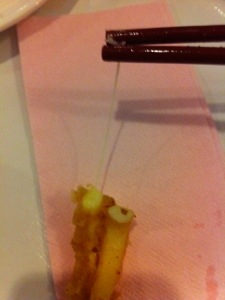
They’re nerves! Squids have the largest nerve or all animals and this is why they’re used extensively in neurology (the study of nerves and brains and all that stuff). So, we have the Mr Squid to thank for all the knowledge and advances we’ve made in the world of neurology.
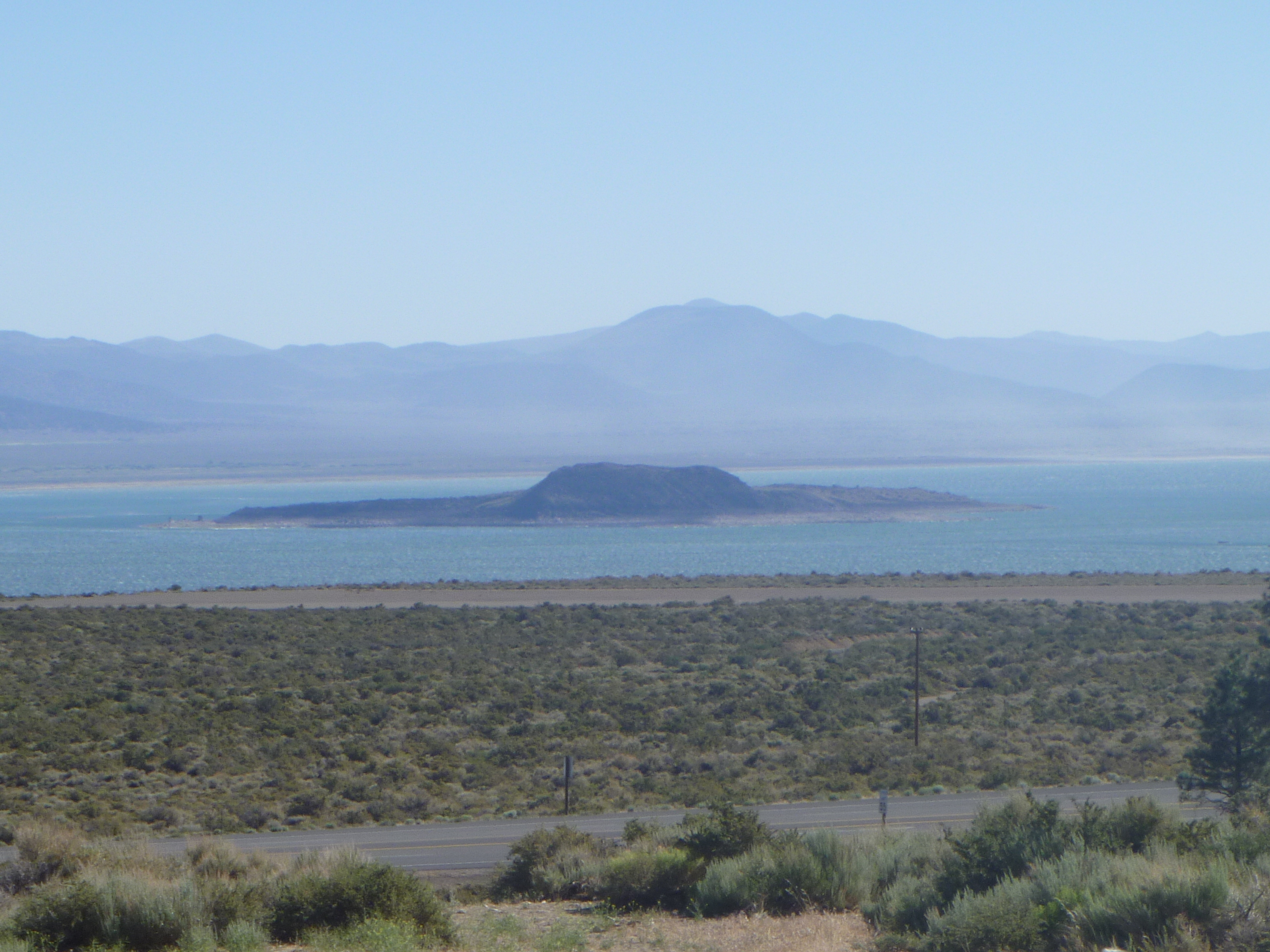
Monolake is one of the oldest lakes in the world. It has no outlets. The lake is surrounded by pillars of calcium carbonate that form as the water evaporates. Some of these spires may be as old as 200-250 years.
During summer, 1 trillion brine shrimp reach maturity and provide a food source for water birds. In the olden days, the Mono tribes used to harvest the shrimp, drying them to preserve them for their winter diet and for bartering with neighbouring tribes.