All you wanted to know about Aeromonas hydrophila.

At this time of the year, fish keepers and aquaculturists may be a bit apprehensive about Aeromonas infection. Does it really cause disease? When does it cause disease? Can we tell the difference between normal strains and bad strains of the bacteria?

So, I’ve taken the liberty to write a summary about the bug. Sorry it’s a bit techy.

The passages below have been paraphrased from Austin B, Austin DA: Bacterial Fish Pathogens: Disease in Farmed and Wild Fish. 4th edition. Springer-Praxis, Goldalming, 2007.

INTRODUCTION
Aeromonas hydrophila (previously A. formicans and A. liquefaciens) can cause haemorrhagic septicaemia, red sore disease and fin rot. It has a worldwide distribution, is rife in freshwater environments (including on aquatic plants, fish and fish eggs) and can affect many freshwater fish species and occasionally, marine fish. There is some contention over whether this is a primary pathogen or merely a secondary invader of already compromised hosts.

Disease signs include eroded fins, haemorrhages on the skin, sloughing of scales, skin ulcers and haemorrhaging in the intestine wall. Exopthalmia (pop-eye) and ascites with subcutaneous oedema (dropsy) can also be observed. Mortality rate can be high.

HOW IS THE BACTERIA IDENTIFIED?
Generally speaking, A. hydrophila is a Gram-negative, straight bacterial rod, and they are motile by a single polar flagellum, plus or minus lateral flagella. It is speculative whether or not the fish isolates belong as A. hydrophila or in any of the other Aeromonas Hybridisation Groups. It is apparent that the bacteria has considerable exo-enzyme potential including haemolysins, serine and metallo-protease and some of which have relevance in fish pathology. There is definitely marked phenotypic, biochemical, serological and genotypic differences (e.g. presence or absence of the 21kb plasmid detected in pathogenic isolates associated with ulcerative disease syndrome) and improvements in aeromonad taxonomy may eventuate with the emergence of other taxa as fish pathogens.

CAN WE TELL WHICH ISOLATES ARE BAD?
Are we able to identify which A. hydrophila are pathogenic, and which ones aren’t? This could be a million dollar question that a lot of work has not found an easy answer. There is no direct correlation between virulence and haemagglutination. The surface array matrix (S-layer that influences bacterial interaction with its environment) that has been shown to be a prerequisite for virulence in A. salmonicida does not apply to A. hydrophila. Bacterial surface-binding expression to I-labelled collagen, fibronectin and laminin (common to isolates from diseased fishes) cannot be used because its properties were influenced by in vitro culture conditions. One study reported that precipitation of the bacteria after boiling was an important measure of virulence, but this is debatable.

What has shown promise in identifying virulence include the action of their adhesins (these situated on bacteria’s outer membrane protein [OMP], to attach to selected host cells/tissue proteins [e.g. collagen, fibronectin, serum proteins and glycoproteins], of which AHA1 [a 43 kDa protein] has shown to be present in virulent strains), the presence of a 40 kDa protein in their OMP, the presence of haemolytic (heamolysins) and proteolytic (proteases such as caseinase, elastase, and metallo- and serine proteases) extracellular products (ECP). A further study identified acetylcholinestrase (a 15.5 kDa polypeptide) in the ECP and regarded this to be a major lethal factor with possible neurotoxic activity. Some strains show enterotoxigenicity and those that possess the O-antigen (somatic antigen) and K-antigen were present in most virulent isolates. Comparison of virulent and avirulent isolates using molecular techniques (suppression subtractive hybridisation) identified 69 genemic regions absent from the latter. Genes considered to represent known virulence attributes include haemolysin, histone-like protein, oligoprotease A, OMP and multi-drug resistance protein. Other genes encoded synthesis of O-antigen.

WHAT ARE THE RISK FACTORS TO YOUR POND?
One of the biochemical characteristics of A. hydrophila is that it reduces nitrates. Given this, and the fact that high levels of nitrates (dirty pond with insufficient water changes) are immunosuppressive, could we then infer that ponds with high levels of nitrates could be a predisposing factor? Having said this, could being too clean be harmful? The other school of thought is to maintain a good balance of a diversity of bacterial flora.
The bacteria exhibit a chemotactic response to the mucus of freshwater fish. The evidence points to a stress-mediated disease condition which is influenced by elevated water temperatures (temperatures above 9.4 degrees Celsius). The presence of pollutants increases susceptibility to infection.

One in vitro study showed that calcium in the growth medium enhanced the expression of the bacterial extracellular matrix protein surface receptors. These surface receptors are important for the bacteria to latch on to the fish. Extrapolating this, could it mean that water with a higher calcium content may be a risk factor?

Many bacterial pathogens utilise iron and the haemolysins in A. hydrophila are iron-regulated. Could an elevated iron content in the water be a risk factor?

SUMMARY
Aeromonas hydrophila is ubiquitous, it is present in every freshwater fish pond. It has the potential to cause disease, usually in association with other factors. Current methods are unable to identify virulent versus avirulent strains. Risk factors include host health, environmental factors and bacterial virulence.
Sea butterflies at risk due to ocean acidification.

See article here – http://mobile.news.com.au/breaking-news/world/acidity-proves-a-problem-for-sea-butterfly/story-e6frfkui-1226523943322

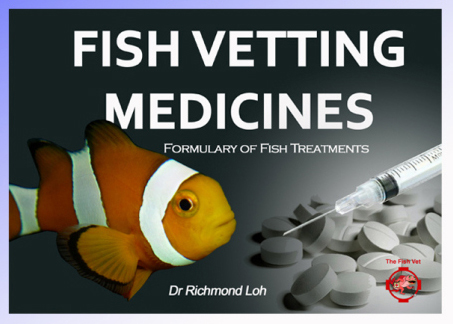
Fish Vetting Medicines: Formulary of Fish Treatments.

With nearly 300 drug entries, it is a comprehensive yet practical, quick access reference; making it an indispensible resource for anyone interested in fish health including veterinarians. It’s like MIMS for fish!

Its content organisation is designed for enhanced navigability with medicines arranged by:

  • Pathogen type (disease causing organisms),
  • Therapeutic use or groups,
  • Common disease conditions,
  • And in alphabetical order.

Read more here.

Fish-e trivia for Monday-itis: What’s bigger than a giant squid?

It’s the Colossal Squid!


I learnt this from my colleague’s 8-year-old! … and verified on Wikipedia!


From Wikipedia:


The giant squid (genus: Architeuthis) is a deep-ocean dwelling squid in the family Architeuthidae, represented by as many as eight species. Giant squid can grow to a tremendous size (see Deep-sea gigantism): recent estimates put the maximum size at 13 m (43 ft) for females and 10 m (33 ft) for males from caudal fin to the tip of the two long tentacles (second only to the colossal squid at an estimated 14 m (46 ft),[1] one of the largest living organisms). The mantle is about 2 m (6.6 ft) long (more for females, less for males), and the length of the squid excluding its tentacles is about 5 m (16 ft). Claims of specimens measuring 20 m (66 ft) or more have not been scientifically documented.

The colossal squid (Mesonychoteuthis hamiltoni, from Greek mesos (middle), nychus (claw), and teuthis (squid)), sometimes called the Antarctic orgiant cranch squid, is believed to be the largest squid species in terms of mass. It is the only known member of the genus Mesonychoteuthis. Though it is known from only a few specimens, current estimates put its maximum size at 12–14 m (39–46 ft) long,[1] based on analysis of smaller and immature specimens, making it the largest known invertebrate.


I can’t wait till my little boy starts to teach me new and wonderful things such as this!

Renew your WAVMA membership.

At WAVMA (World Aquatic Veterinary Medical Association, a global professional body serving veterinarians in aquatic animal health industries), we are ready to roll out several new member-only services and programs late this year or early in 2013, including WebCEPD (webinars), the Cert-AqVP program, discounted book purchasing, and a lot more. We don’t want any of you to miss out on these. Stay tuned for information.

To help you through membership renewal and updating your profile: to check your current membership status, the data in your profile, and to renew membership for 2013, you will need to log into your profile at http://www.wavma.org/wavma-members/member-profile.cfm?.

This information was provided through the Communications Committee.

Yours sincerely,

Dr Richmond Loh
President-elect WAVMA

What’s your biggest fish health issue?

Since I started blogging, I’ve been sharing tips, strategies and advice on optimising aquatic animal health, whether it be ornamental pet fish, breeder units, public aquaria, backyard aquaponics, educational facilities or large scale aquaculture farms.

I’ve really put a lot of effort into delivering the very best content I can in a format that’s easy to understand… and the feedback I’ve received to date has been great!

But I need your help…

I’d like to continue delivering content that helps you succeed…

Obviously I can choose whatever topics I think will help you the most (and there’s a lot to cover) but it makes a lot more sense to find out what your biggest challenges are when it comes to rearing your fish.

If I know that, then I’ll be able to deliver content that aligns with what you want to hear about most.

All you need to do is write your biggest challenge(s) in the comments section below…

The more detail you provide the better it’ll be because it will help me focus my content on exactly where you’re stuck.

Immune response of fishes to ciliates.

Immune response of fishesnext term to ciliates

H.W. Dickerson Corresponding Author Contact Information, , T.G. Clark∗∗

a Department of Medical Microbiology, College of Veterinary Medicine, University of Georgia, Athens, GA 30602, USA

b Department of Microbiology and Immunology, College of Veterinary Medicine, Cornell University, Ithaca, NY 14853, USA

Available online 13 February 2004.

Abstract

Ciliates are highly evolved protists comprising a phylum of diverse species, many of which are opportunistic or obligate parasites. Ciliates parasitic to previous termfishnext term consist of salt and freshwater forms with endo- or ectoparasitic modes of infection. Some of the more commonly encountered genera include Chilodonella, Brooklynella, Ophryoglenina, Ichthyophthirius, Cryptocaryon, Uronema, Tetrahymena, Epistylus, and Trichodina. Species range from obligate parasites and commensals to opportunistic, facultative forms. Some parasitic ciliates are highly pathogenic and previous termfishesnext term in closed environments such as aquaria and farm ponds are particularly susceptible to high mortalities. Nevertheless, previous termfishnext term have evolved an immune system capable of mounting an effective protective response against parasite challenge. Much of the experimental research on immunity against ciliates has been carried out with Ichthyophthirius multifiliis, on obligate parasite that invades surface epithelia of virtually all freshwater previous termfishnext term species. Interest in the immune response against I. multifiliis stems from the fact that convalescent previous termfishnext term become resistant to subsequent challenge (suggesting the possibility of immunoprophylaxis), and the need to curtail severe losses caused by this parasite in intensively farmed previous termfishes. Furthermore, I. multifiliis has proven to be a useful experimental model because it is amenable to study under laboratory conditions. In this review cellular and humoral factors involved in both innate and acquired immunity against ciliates are covered and include natural killer cells, phagocytic cells, and antibody responses. Current ideas on the mechanisms of antibody-mediated cutaneous immunity against I. multifiliis are discussed and approaches toward the development of vaccines against this and other ciliate parasites are presented.

Keywords: Immunity; previous termFish; Ciliates; Ichthyophthirius multifiliis