The 44th IAAAM Conference is scheduled for April 21-26, 2013 in Sausalito, CA, USA.

——— Forwarded message ———-
From: IAAAM <stephanie.venn-watson@nmmf.org>
Date: Sat, Dec 15, 2012 at 4:13 AM
Subject: Upcoming IAAAM due dates
To: Richmond <thefishvet@gmail.com>


IAAAM
Updates
 
 
MEDWAY SCHOLARSHIP APPS
IAAAM MEETING DUE DATES
 Mark your calendar!
 

MESSAGE FROM IAAAM

Hello Everyone-

As 2012 winds to an end, we have a few important due dates to share with you.

  • Applications are now being accepted for the 2013 IAAAM Medway Scholarship Program. The application deadline is March 1, 2013. Details about the Medway Scholarship Program are provided below.
  • The 44th IAAAM Conference is scheduled for April 21-26, 2013 in Sausalito, CA. Both abstracts and travel award applications are due early this year, January 15, 2013. Click here to submit your abstracts. To help address past issues regarding website access and online payments, we are using an outside online service to oversee conference registration.The official IAAAM conference website should be up and running on January 2, 2013.

We wish you all a warm and joyful holiday season. See you in April!

Sincerely,
IAAAM Board

2013 IAAAM MEDWAY SCHOLARSHIP PROGRAM
The International Association for Aquatic Animal Medicine (IAAAM) recognizes a continuing need for the funding of research projects focused on aquatic animal medicine. IAAAM also recognizes the value and importance for students to gain solid scientific research training. To help fill these needs and to further promote involvement of students in aquatic animal medicine, the IAAAM has established the Medway Scholarship Program designed to support research experiences for students interested in pursuing careers in aquatic animal medicine.

The program is primarily intended for undergraduate, veterinary, and graduate students without stipends or other sources of funding. The purpose of the scholarship is to partially support the student for research experiences beyond that which they might experience with normal undergraduate classwork or a graduate/veterinary curriculum.

Objectives

  • Provide students with exposure to sound research practices in the field of aquatic animal medicine beyond what is normally included as part of the undergraduate or graduate/veterinary curriculum. 
  • Encourage students to pursue post-graduate careers incorporating research in aquatic animal medicine.
  • Encourage student participation in the IAAAM.

Program Description:
The IAAAM Medway Scholarship Program provides scholarships of up to $3,000 each to students who have been accepted to participate in a research project organized and funded by government, academic, or private entities. The sponsoring entity must provide the student with at least a 10 to 12-week working exposure to research focused on aquatic animal medicine and must involve direct interaction with a current IAAAM member in good standing. Funding for the research activity must be provided by the sponsoring entity. Scholarship awards are intended to support the student’s personal expenses while participating in the funded research. Scholarship recipients will be required to present their research findings at a future IAAAM conference, and will still be eligible for other IAAAM student awards.
Factors that are considered in selecting the scholarship recipient are briefly described below.  They are not listed in any particular order of importance but are included to assist the applicant in preparing the application form and letter.

  • Commitment of the applicant to a career in aquatic animal medicine as reflected in the applicant’s letter of intent and curriculum vitae (CV).
  • Applicant’s grade point average/class rank.
  • Quality, scientific merit, and duration of intended research.   Applicants are encouraged to select research projects with established funding sources, clearly defined aims, and project timelines that will enable the student to complete the research during the allotted time period. Applicants are encouraged to pursue research activities at institutions with proven or established aquatic animal research programs. Project summaries detailing the planned research, aims, importance, methods, and funding sources will be judged for each applicant. Projects for which the budgeted work has already been completed are not eligible for consideration.
  • Two (2) letters of recommendation, one of which must come from a member in good standing of IAAAM.
  • Financial needs of the student in addition to other available funding such as that provided by the institution providing the research opportunity.
  • Previous recipients of the award are encouraged to apply, however priority will be given to those who have not previously received the scholarship.
  • Application Submission Deadline:  March 1, 2013. Please submit completed applications to:

Dr. Lisa Murphy, IAAAM Education Board Member
PADLS New Bolton Center Toxicology Laboratory
382 W. Street Road
Kennett Square, PA  19348
610-925-6217
murphylp@vet.upenn.edu

  • Submissions can be sent either by mail or electronically, however must be received by March 1, 2013.
  • Winners will be notified by April 1, 2013 and recognized during the 2013 IAAAM Conference in Sausalito, California.

Application requirements:
–          Application form
–          Letter of intent detailing applicant’s career goals and goals for the research activity.
–          Two (2) letters of recommendation, one of which must come from a member in good standing of IAAAM
–          Student’s curriculum vitae (should include any other research experience with citations)
–          Official school transcripts for currently enrolled institution only
–          Letter of agreement from the principle investigator at the sponsoring institution, identifying the location and duration of the research project and its expected funding source(s)
–          Student budget of estimated expenses (e.g. transportation, rent, meals) separate from direct research related expenses.
–          Project Summary completed by student applicant: (3-page limit; single spaced; ¾-inch margins; 11-point Times, Times New Roman or Arial font).
Failure to adhere to these guidelines will result in disqualification.
 
Project Summary should include:
–          brief project abstract/overview
–          the project aims/hypotheses
–          justification and literature review
–          materials and methods
–          significance to the field of aquatic animal medicine/health
–          research budget – including direct and indirect funding sources
–          research time table
–          student’s role in the project
–          mentor’s qualifications
 
If live animals (including client/privately-owned animals) are used in any way in the project, the mentoring researcher must provide assurance that the planned research project has or will obtain full Institutional Animal Care and Use Committee (IACUC) approval.             


 Sorry, none of these social media outlets yet!
   

Copyright © 2012 IAAAM All rights reserved.


International Association for Aquatic Animal Medicine Communications to: 2240 Shelter Island Drive San Diego, CA 92106
Email Marketing Powered by MailChimp


Follow me on: Facebook “Fin Page” – YouTube – Blog – Linkedin – Twitter 

Yours sincerely,

Dr Richmond Loh

BSc, BVMS, MPhil (Vet Path), MANZCVS (Aquatics), MANZCVS (Pathobiology), DipPM.
Veterinarian | Adjunct Senior Lecturer Murdoch University | WAVMA Communications Committee Member |
Secretary Aquatic Animal Health Chapter – Australian and New Zealand College of Veterinary Scientists (ANZCVS)
The Fish Vet, Perth, Western Australia, AUSTRALIA. Mobile Veterinary Service for fish and other aquatic creatures.
http://www.thefishvet.com.au
Ph: +61 (0)421 822 383
 

Check out the book review of Fish Vetting Medicines in the JAVMA.

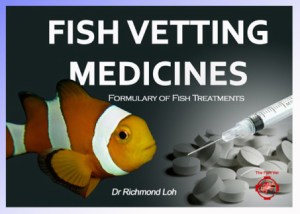
Fish Vetting Medicines – Formulary of Fish Treatments has been reviewed by Dr Nick Saint-Erne in the Journal of the American Veterinary Medical Association (JAVMA). See the last page of attached pdf document by clicking on the link below:

JAVMA Book Reviews (2012-12)


Black Book.

What do you look for when examining wet preparations of gill biopsies?

How can you tell if a fish is sick? Sometimes fish are diseased and show no clinical signs…. yet. And before you know it, many fish start dying. This is why checking their gill health even when they are well is so important. So, what is it that I look for when I beam down on the gills? I’ll tell you how in this free video clip I’ve made and uploaded to my youtube channel and you can access it by clicking on this link.

You can tuned for more updates on multiple social media platforms including Facebook “Fin Page” YouTubeBlogLinkedinTwitter


Yours sincerely,

Dr Richmond Loh
BSc, BVMS, MPhil (Vet Path), MANZCVS (Aquatics), MANZCVS (Pathobiology), DipPM.
Veterinarian | Adjunct Senior Lecturer Murdoch University | WAVMA Communications Committee Member |
Secretary Aquatic Animal Health Chapter – Australian and New Zealand College of Veterinary Scientists (ANZCVS)

The Fish Vet, Perth, Western Australia, AUSTRALIA. Mobile Veterinary Service for fish and other aquatic creatures.
http://www.thefishvet.com.au
Ph: +61 (0)421 822 383

www.facebook.com/thefishvetdrloh

Dr Loh has added a heap of new photos on his Facebook fan page (http://www.facebook.com/thefishvetdrloh/photos_stream). Be sure to LIKE it to get more regular updates on that platform.

Results from a diet trial for the common octopus (Octopus vulgaris) – should we be culturing them?

This critter seems very expensive to grow and you almost have to feed it a diet entirely of squid or fish to make some octopus. This high protein dietary requirement, plus their ingenuity in not staying put might mean putting this species in the large, growing pile of non-culturable species. I believe we should be directing the limited resources for aquaculture/fisheries research into known culturable species, into replenishing wild stocks and into looking after our environment which is the real resource.

See a previous post – https://thefishvet.com/2012/02/21/fish-are-fed-fish-to-grow-fish-should-we-be-farming-carnivores-or-vegetarians/

See the article below:

Aquaculture
Volume 369, Number 1-2 (November 2012)
Growth and digestibility of formulated diets based on dry and freeze-dried ingredients in the common octopus (Octopus vulgaris)
Authors: P.S. Morillo-Velarde, J. Cerezo Valverde, M.D. Hernández, F. Aguado-Giménez, B. García García
Author Affiliations:
no affiliations available
Source: Aquaculture, Volume 369, Number 1-2 (November 2012)
Page Numbers: 139 – 144
Available Full Text:
Full Text: Subscription Required to view full text
Format: PDF
Size: Unknown
Location: Publisher’s Site
Authentication: Publisher’s Site
Abstract: We studied the growth of O. vulgaris and the digestibility of two semi-moist diets (50% water) based exclusively on dry and freeze-dried ingredients (Diet S: 20% gelatin, 10% egg yolk powder, 5% Sardinella aurita and 15% Todarodes sagittatus; and Diet P: the same as the previous diet but substituting T. sagittatus by pea). Both diets had a similar macronutrient composition (70–73% protein DW, 12–13% lipids DW), a firm texture when introduced into the water and good acceptability. Survival was 100% with both diets. The specific feeding rates were also similar for both diets (1.0% body weight/day; P0.05), although the best results were obtained with diet S, which was responsible for an absolute growth rate of 9.6g/day and a feed conversion rate of 1.0, compared with the 2.2g/day and 3.9 obtained with diet P; P<0.05). The protein and lipid productive values were significantly higher for diet S than for diet P (43.6 and 13.3% vs. 20.2 and -0.5%, respectively). The good results obtained with diet S may be explained by its greater digestibility (93.3% for dry matter, 97.0% for proteins and 87.9% for lipids) compared with the corresponding value for diet P (73.8%, 92.1% and 85.0%, respectively). The findings demonstrate that O. vulgaris can be fed with dry or freeze-dried ingredients that have undergone mild heat treatments since they lead to good growth, feed efficiency and digestibility. Future studies on octopus on-growing could use a similar base to that proposed in this paper to obtain diets with better acceptability, stability or nutritional composition for commercial purposes.
Citation: P.S. Morillo-Velarde, J. Cerezo Valverde, M.D. Hernández, F. Aguado-Giménez, B. García García . Growth and digestibility of formulated diets based on dry and freeze-dried ingredients in the common octopus (Octopus vulgaris). Aquaculture, Volume 369, Numbers 1-2 (November 2012), pp. 139-144, <http://ejournals.ebsco.com/direct.asp?ArticleID=4FA5AD831B216E8D179E&gt;
URL: http://ejournals.ebsco.com/direct.asp?ArticleID=4FA5AD831B216E8D179E

Free online info for ornamental fish owners has been unveiled.

Check out – http://www.aquariumindustries.com.au/fish-school/

And for those who want more advanced knowledge and some of the fish veterinary secrets, check out "Fish Vetting Essentials" manual at https://thefishvet.com/

Cool video of a rare transversotrematid worm from the skin of a Frontosa.

Check out this cool critter I uploaded to my youtube channel –

You need to watch it with sound. I had a bit of a chuckle when the client described it as resembling his wife! Not quite the late Steve Irwin, the Crocodile Hunter, but it could be his twin!

Can you identify this bug in the wet preparation? It’s apparently a transversotrematid, possibly Prototransversotrema steeri. It’s one of the few digeneans (they have an indirect life cycle via an intermediate snail host) that are ectoparasitic, living in the scale pockets (and for this reason, they are wider than they are long). Because they’re not exposed to the water, bath treatments won’t work. Oral praziquantel might be more efficacious, although it is unlikely to spread in an aquarium without the snail host. It’s not a common freshwater fish critter and this is why it has taken me over 10 years for my first encounter. There’s a species called T. haasi that has an especially broad host range among the Indo-Pacific reef fishes.

The two black spots are its eyes and between them is its pharynx/mouth. The loop with fluid moving through it is the gut, and it’s called a cyclocoel.

The information provided above has been the combined responses of Drs Marty Deveney and Al Dove. Thanks guys!


Follow me on: Facebook "Fin Page" YouTubeBlogLinkedinTwitter
Yours sincerely,

Dr Richmond Loh
BSc, BVMS, MPhil (Vet Path), MANZCVS (Aquatics), MANZCVS (Pathobiology), DipPM.
Veterinarian | Adjunct Senior Lecturer Murdoch University | WAVMA Communications Committee Member |
Secretary Aquatic Animal Health Chapter – Australian and New Zealand College of Veterinary Scientists (ANZCVS)

The Fish Vet, Perth, Western Australia, AUSTRALIA. Mobile Veterinary Service for fish and other aquatic creatures.
http://www.thefishvet.com.au
Ph: +61 (0)421 822 383

Looking for more books? Check out this site.

Thinking of using fish pedicures? Think again.

From: “Dr. David Scarfe”
Date: 28 November 2012 20:08:08 AWST
Subject: AquaVetMed: Fish Pedicures & Possible Zoonotics

November 28, 2012
Agency warns of dangers of fish pedicures

In 2008, a pedicure trend swept the nation: tiny fish eating the dead skin off customers’ feet. Now the Centers for Disease Control and Prevention warn that the “doctor fish” may carry bacteria that could cause serious infections. Shortly after the fish pedicures began, public health agencies spoke out against the practice, and California, Florida and several other states banned it. Texas banned such pedicures in 2008.

The CDC published a report Wednesday by the Centre for Environment, Fisheries & Aquaculture Science in the United Kingdom, which studied the kinds of bacteria carried by the doctor fish, Garra rufa, an inch-long silver carp native to Southeast Asia.
“To date there has been only limited information on the types of bacteria associated with these fish,” lead researcher David Verner-Jeffreys said. “Our study identified some of the species of bacteria associated with this fish species, including some that can cause infections in both fish and humans.”

It’s no secret that water provides a breeding ground for all kinds of bacteria. Mix that with bacteria living on fish scales or in their waste and even the tiniest cut from an overzealous doctor fish, and the risk of infection is very real. Doctor fish are generally imported to salons from Indonesia or Malaysia, which can make it difficult to control the quality of the fish breeding and environment.

After an outbreak of strep bacteria last year in a shipment of the fish, the British government seized five containers from London Heathrow Airport to study what kinds of bacteria the fish were carrying. “The [strep] strain we isolated typically only causes disease in fish,” Verner-Jeffreys said. “We then went on to look at other consignments of apparently healthy imported G. rufa and found some other species of bacteria that can cause disease in humans and fish.” These bacteria included Aeromonas, which causes wound infections and gastrointestinal problems in humans; Streptococcus agalactiae, which causes skin and soft-tissue infections; and Mycobacteria, which the study reported have been responsible for skin infections in some pedicure clients in the U.K.

The researchers also found that these bacteria are often resistant to multiple drugs and therefore difficult to kill. “To date, there are only a limited number of reports of patients who might have been infected by this exposure route,” the report says. “However, our study raises some concerns over the extent that these fish, or their transport water, might harbor … pathogens of clinical relevance. It should be emphasized that neither us nor the [British] Health Protection Agency are advising that the practice should be banned,” Verner-Jeffreys said. “Any risks may be reduced by use of disease-free fish reared in controlled facilities under high standards of husbandry and welfare.”

See the source (http://tinyurl.com/c7gfovk) for the full story.

[The information referred to in this news story is neither a CDC or a CEFAS “Report.” It is actually a letter to the editor from David W. Verner-Jeffreys (CEFAS, UK), published in Emerging Infectious Diseases, 18 (6), June 2012. It is accessible at http://wwwnc.cdc.gov/eid/article/18/6/11-1782_article.htm. ADS-Mod]
___________________________
AquaVetMed e-News provides information to veterinary and veterinary-allied subscribers concerning aquatic animal medicine, health, welfare, public health and seafood safety, obtained from a variety of sources (largely AquaVetMed subscribers). While provided by the American Veterinary Medical Association’s, Aquatic Veterinary Medicine Committee and are for public distribution, they do not necessarily reflect the opinion of the AVMA or the veterinary profession. See the AVMA Terms of Use (http://tinyurl.com/29h2rf) for further information.

If e-News information is used elsewhere please acknowledge AquaVetMed as the source. Encourage individuals to subscribe rather than distribute through list serves.

Messages may contain attachments that will have been scanned for known viruses.

Subscription and Contributions: Interested veterinarians and veterinary-allied professionals can subscribe, unsubscribe, or contribute pertinent news or information, by sending a message with “For AquaVetMed -” and the topic in the subject line, to dscarfe@avma.org.

Note: Undelivered e-mails will not be resent; Subscribers will be deleted from the list after repeated undelivered or bounced messages and will have to re-subscribe.

Visit our website: http://www.avma.org

________________________________
The Fish Vet’s veterinary services – integrated innovative solutions.

In veterinary health care, there may be service boundaries defined by providers’ clinical specialties. The results will be fragmented, inconvenient, inefficient and the outcomes compromised for the solutions you needed yesterday. The Fish Vet’s services are designed to achieve excellent outcomes for clients with customised needs.

Most veterinarians have expertise in single fields. Dr Loh is unique in that he is one of only two veterinarians globally who has post-graduate, Membership qualifications in aquatic animal health and in veterinary pathology, admitted by examination to the Australian and NZ College of Veterinary Scientists. He also holds a research Masters degree. This means that he can solve your problems in the field or laboratory, and can devise strategies for research if the problems are more complex.

Dr Loh is affiliated with many world class organisations, serving as the Secretary of the Aquatic Animal Health Chapter of the Australian and New Zealand College of Veterinary Scientists, President-elect of the World Aquatic Veterinary Medical Association, a Senior Adjunct Lecturer at Murdoch University’s Veterinary and Biomedical Sciences section and a past Treasurer for the Australian Society of Veterinary Pathologists. He is also a member of the International Association for Aquatic Animal Medicine and a member of the European Association of Fish Pathologists.

The Fish Vet as a one-stop shop, gives the clients a personal connection to the all the veterinary services you require. The Fish Vet’s clients benefit from more convenient and better coordinated access to veterinary services and improved outcomes. The Fish Vet operates a mobile consultancy service and so no matter where you are in Australia, Dr Loh can organise delivery of his services to your pet, your business or your farm.

To find out more, go to –
TheFishVet’s site  or

see the adverts:

20121207-220734.jpg

Check out this flatworm from a skin scrape of a Frontosa. Do you know what it is?

TheFishVetDrLoh has shared a video with you on YouTube:

Trematode from a skin scrape of Cyphotilapia frontosa Tembwe.

I had a bit of a chuckle when the client described it as having two eyes and a mouth, resembling his wife!…