Rob Jones’ gill talk

It’s 5:30am and I’ve just come out of Rob’s fish gill talk (https://thefishvet.com/2012/12/19/if-you-liked-my-fish-gill-webinar-you-might-also-be-interested-in-this/),
and thought it went rather well. With a tighter target audience of aquatic veterinarians, the presentation was tailored to meet its audience’s needs.

Well done Rob!

For those who missed it, the PDF will be made available for WAVMA members in due course.


Yours sincerely,

Dr Richmond Loh
BSc BVMS MPhil MANZCVS (Aq & Pathol)
The Fish Vet, Perth, Western Australia.
Veterinary Medicine for fish.
http://www.thefishvet.com.au
Ph: +61 (0)421 822 383

What photoperiod is best for raising fish larvae?

Like many other very young animals, fish larvae would require higher feed frequency. This research article shows that larval survival and growth rate are significantly higher with longer ‘daylight’.


Aquaculture Research
  Volume 44, Number 1 (December 2012)
     Larviculture of burbot (Lota lotaL.): larval rearing using Artemiaand weaning onto dry feed
   Authors: Hendrik Wocher, Alexander Harsányi, Frieder J Schwarz
   Author Affiliations:
no affiliations available
   Source: Aquaculture Research, Volume 44, Number 1 (December 2012)
   Page Numbers: 106 – 113
   Available Full Text:
Full Text: Subscription Required to view full text
Format: PDF
Size: unknown
Location: Publisher’s Site
Authentication: EBSCOhost EJS
   Abstract: The burbot (Lota lota) is the only gadoid fish in freshwater and could be an interesting candidate for an aquaculture production. The objective of this study was to develop suitable rearing techniques for early life stages of burbot larvae under intensive rearing conditions. Burbot larvae were reared with live food (Artemia salinanauplii) whilst the effects of different photoperiods (24 h light and 12 h light) and ration level on growth and survival of the larvae were investigated from 7 to 56 days posthatching (dph). Larvae reared under continuous light survived (45.4%) and grew better [specific growth rate (SGR): 7.9 % day-1] than under 12 h light (34.2% respectively 7.1 % day-1). Rearing burbot larvae with three different ration levels [20–80 (I), 40–160 (II) and 80–320 (III) Artemiaper larva per day] resulted in a clear relationship between food availability and larval performance [SGR: 8.1 (I), 9.2 (II) and 10.0 (III) % day-1]. Burbot larvae were weaned from Artemiaonto two commercial microparticulate diets (MPD). Two different particle sizes of MPD1 (AGLONORSE) and MPD2 (START) were introduced on 35 and 56 dph. The two weaning experiments were conducted independently of one another. The MPD2 was not accepted at all, thus none of the larvae survived. Feeding of MPD1 from 56 to 91 dph resulted in better growth (SGR: 9.7 % day-1) and survival rate (13.5%) as distinct from 35 to 70 dph (SGR: 4.6 % day-1, survival rate: 10.5%). The results of our study indicate the potential of the burbot for a successful commercial larviculture in the future.
   Citation: Hendrik Wocher, Alexander Harsányi, Frieder J Schwarz . Larviculture of burbot (Lota lotaL.): larval rearing using Artemiaand weaning onto dry feed. Aquaculture Research, Volume 44, Number 1 (December 2012), pp. 106-113, <http://ejournals.ebsco.com/direct.asp?ArticleID=4D60ABCC3BBA92C1EFBC&gt;
   URL: http://ejournals.ebsco.com/direct.asp?ArticleID=4D60ABCC3BBA92C1EFBC

If you liked my fish gill Webinar, you might also be interested in this.

From: “Dr. David Scarfe”
Date: 17 December 2012 0:47:04 AWST
Subject: AquaVetMed: REMINDER – WebCEPD “Veterinary Anatomy, Structure & Function of Fish Gills, The Powerhouse of Fish”

Last chance to participate in a WAVMA WebCEPD webinar
“Veterinary Anatomy, Structure & Function of Fish Gills – The Powerhouse of Fish”

This webinar is free and open to WAVMA members and non-members that register (see below). However, veterinary Continuing Education & Professional Development (CEPD) credit, useful for re-licensing or re-registration requirements, will only be available to WAVMA Members. To become a WAVMA member, go to http://www.wavma.org/Become-a-member.

Please feel free to distribute this to others interested in aquatic veterinary CEPD.

Please note your local time for this webinar scheduled for Wednesday, December 19, 2012 at 20:00 UTC/GMT (8:00 PM).
Wednesday 20:00 UTC/GMT times in other locations:
Chicago (USA) – Wed 2:00 PM
London (UK) – Wed 8:00 PM
Brussels (EU) – Wed 9:00 PM
Moscow (RUS) – Midnight, Wed-Thu
Osaka (JAP) – Thu 5:00 AM
Melbourne (AUS) – Thu 7:00 AM

Veterinary Anatomy, Structure & Function of Fish Gills – The Powerhouse of Fish
Join us for a WAVMA AquaticVet WebCEPD Webinar on December 19, 2012

Space is limited.
Reserve your Webinar seat now at:
https://www3.gotomeeting.com/register/740660838
Veterinary Anatomy, Structure & Function of Fish Gills – The Powerhouse of Fish
Gills are the major difference between aquatic fish and land-based animals. In this Webinar we will examine the gills of fish and how and why fish breathe underwater and what amazing organs the gills are.

Title:
Veterinary Anatomy, Structure & Function of Fish Gills – The Powerhouse of Fish
Presenter:
Rob Jones BVSc(Hons), MACVSc(Aq), MAqua – “The Aquarium Vet”, Victoria, Australia
Date:
Wednesday, December 19, 2012
Time:
8:00 PM – 9:00 PM GMT (check here for your local time)

Learning
Objectives:
Participants will understand how and why fish breathe underwater, including the key components about gill anatomy, ventilation, gas exchange, metabolic waste excretion, osmoregulation and how to biopsy gills

CEPD Credit:

1.5 hours
After registering you will receive a confirmation email containing information about joining the Webinar.
System Requirements
PC-based attendees
Required: Windows® 7, Vista, XP or 2003 Server
Mac®-based attendees
Required: Mac OS® X 10.5 or newer
Mobile attendees
Required: iPhone®, iPad®, Android™ phone or Android tablet

___________________________
AquaVetMed e-News provides information to veterinary and veterinary-allied subscribers concerning aquatic animal medicine, health, welfare, public health and seafood safety, obtained from a variety of sources (largely AquaVetMed subscribers). While provided by the American Veterinary Medical Association’s, Aquatic Veterinary Medicine Committee and are for public distribution, they do not necessarily reflect the opinion of the AVMA or the veterinary profession. See the AVMA Terms of Use (http://tinyurl.com/29h2rf) for further information.

If e-News information is used elsewhere please acknowledge AquaVetMed as the source. Encourage individuals to subscribe rather than distribute through list serves.

Messages may contain attachments that will have been scanned for known viruses.

Subscription and Contributions: Interested veterinarians and veterinary-allied professionals can subscribe, unsubscribe, or contribute pertinent news or information, by sending a message with “For AquaVetMed -” and the topic in the subject line, to dscarfe@avma.org.

Note: Undelivered e-mails will not be resent; Subscribers will be deleted from the list after repeated undelivered or bounced messages and will have to re-subscribe.

Visit our website: http://www.avma.org
________________________________

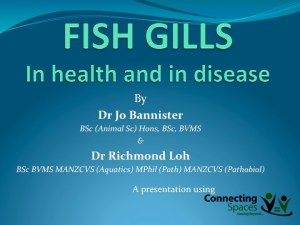
A free webinar – Fish Gills – a closer look – structure & function – in health and diseased states.

This webinar has been put together by Drs Richmond Loh and Jo Bannister and was broadcast via “Connecting Spaces” on Friday 14 December.  The recording has been uploaded onto my YouTube channel where you can view it at your leisure.

Gills - a closer look.

This video is all about fish gills – its structure and function, in health and in diseased/pathological states. Great diagrams and videos of wet preparations and with a heavy emphasis on showing histological sections. Join Dr Jo Bannister as she gives the introduction to how gills work and then continue to watch as Dr Richmond Loh shows fantastic microscopic changes of the way gills react to different aetiological agents ranging from poor water quality to viruses, bacteria, fungi and ectoparasites. These are just some of the many cases he has seen over the years working as The Fish Vet.

View the recorded webinar here.

Download the powerpoint presentation section here.

Feel free to share this with your friends and colleagues.

NB: If you are interested in trialling Connecting Spaces for your organisation, contact:

Dr Joanne Banyer
CEO, ConnectingSpaces
jbanyer@connectingspaces.com.au
+61 (0)4 1513 2506

or

Mr Rob Stafford
Business Development Manager
rstafford@connectingspaces.com.au
+61 (0)4 6776 7375


Follow me on: Facebook “Fin Page” – YouTube – Blog – Linkedin – Twitter

Yours sincerely,Dr Richmond Loh

BSc, BVMS, MPhil (Vet Path), MANZCVS (Aquatics), MANZCVS (Pathobiology), DipPM.
Veterinarian | Adjunct Senior Lecturer Murdoch University | WAVMA Communications Committee Member |
Secretary Aquatic Animal Health Chapter – Australian and New Zealand College of Veterinary Scientists (ANZCVS)
The Fish Vet, Perth, Western Australia, AUSTRALIA. Mobile Veterinary Diagnostic Service for fish and other aquatic creatures.
http://www.thefishvet.com.au
Ph: +61 (0)421 822 383


Does raising the water temperature lead to faster growth rate?

Most people might think that

raising the water temperature –> more appetite & eat more –> faster growth.

This is true to a certain extent, but the upper limit of the temperature would vary between different fish species (a fish is not just a fish).


Check out the work done on this cold water fish below.


Aquaculture Research
  Volume 44, Number 1 (December 2012)
     Effects of high temperature on the growth of European whitefish (Coregonus lavaretusL.)
   Authors: Sten Ivar Siikavuopio, Rune Knudsen, Per Arne Amundsen, Bjørn Steinar Sæther, Philip James
   Author Affiliations:
no affiliations available
   Source: Aquaculture Research, Volume 44, Number 1 (December 2012)
   Page Numbers: 8 – 12
   Available Full Text:
Full Text: Subscription Required to view full text
Format: PDF
Size: unknown
Location: Publisher’s Site
Authentication: EBSCOhost EJS
   Abstract: The effect of three different temperatures on growth in a first progeny generation, hatchery reared, subarctic population of European whitefish (Coregonus lavaretusL.) were investigated. The whitefish (start weight 444 g, ±SD125 g) were reared for 60 days at three constant temperatures; 15, 18 and 21°C and under ambient light regimes for 70°N latitude. The results showed that temperature had a significant influence on the growth of the fish with the highest increase in weight increment occurring at 18°C (mean final weight 656 g ± SD151 g) compared with the growth of fish held at 15°C (mean final weight 591 g ± SD143 g) and 21°C (mean final weight 505 g ± SD121 g). The cumulative per cent mortality of the fish during the experimental period increased with increasing temperature, from 10% at 15°C to 30% at 21°C. The present study indicates that the optimal temperature for farming of European whitefish is somewhere between 15 and 18°C rather than between 18 and 21°C.
   Citation: Sten Ivar Siikavuopio, Rune Knudsen, Per Arne Amundsen, Bjørn Steinar Sæther, Philip James . Effects of high temperature on the growth of European whitefish (Coregonus lavaretusL.). Aquaculture Research, Volume 44, Number 1 (December 2012), pp. 8-12, <http://ejournals.ebsco.com/direct.asp?ArticleID=45D38CC7CBAFF3D385B8&gt;
   URL: http://ejournals.ebsco.com/direct.asp?ArticleID=45D38CC7CBAFF3D385B8

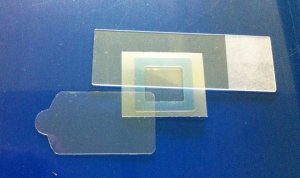
Frame seal slides, ideal to keep that wet prep sample for ‘eternity’!

Frame slides are fantastic for preserving wet preparations for future teaching purposes. The specimen will need to be fixed first in formalin and then mounted onto the frame slides. It gives students the benefit of examining the 3D wet preps of skin scrapes and gill biopsies, looking for ectoparasites. Check it out on my YouTube Channel – http://youtu.be/dR5yv2FR-2Y

Frame Seal Slide

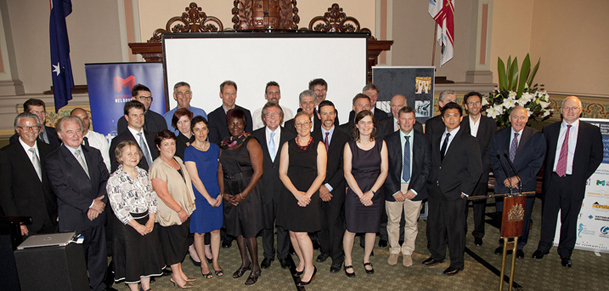
Meet the 2012 International Specialised Skills Institute Fellows.

“..the valuable and unique contribution that our Fellows make in addressing skills deficiencies in Australia to ensure that we remain at the forefront of the global market place…Based on national research we know that Australia needs to deepen skills across all areas of industry and technology, to achieve long-term prosperity.”

“The ISS Institute together with The George Alexander Foundation have traditionally sent one young aspiring Australian overseas annually. This year we had a dilemma. We could not make a distinction between two outstanding applicants. Through the generosity of The Ian Potter Foundation we were able to award a Fellowship to both Dr Richmond Loh and Natalie Roberts.” 

See pictures at TheFishVet’s facebook fanpage – http://www.facebook.com/media/set/?set=a.448003538581934.98547.188036301245327&type=1&l=2c62582ae1

Congratulations to all and may we bring back all the knowledge to keep Australia a ‘clever country’.

Read more here – http://www.issinstitute.org.au/case/12update08roundup.html

(Picture source – http://www.issinstitute.org.au/case/Links/12awardsfellows.jpg)

Results show the importance of using lower/natural temperatures during oocyte maturation and ovulation to obtain good quality eggs in photo-manipulated cod broodstock.


Aquaculture Research
  Volume 44, Number 1 (December 2012)
     Importance of broodstock holding temperature on fecundity and egg quality in three groups of photo-manipulated Atlantic cod broodstock
   Authors: Øyvind J Hansen, Velmurugu Puvanendran, Atle Mortensen
   Author Affiliations:
no affiliations available
   Source: Aquaculture Research, Volume 44, Number 1 (December 2012)
   Page Numbers: 140 – 150
   Available Full Text:
Full Text: Subscription Required to view full text
Format: PDF
Size: unknown
Location: Publisher’s Site
Authentication: EBSCOhost EJS
   Abstract: We conducted a study to evaluate the effects of holding water temperature on the fecundity and egg quality of photo-manipulated Atlantic cod broodstock. Adult cod Gadus morhuawere distributed among several 25-m3tanks. Three separate photoperiods were used for each group to obtain three spawning per year (in May, July and December). While photoperiod was controlled, the temperature was not controlled and followed the ambient seasonal pattern. Due to the uncontrolled seasonal temperature used, each spawning group experienced different temperatures at a particular gonadal developmental stage. Otherwise, all groups were treated the same. Results showed that the May and July spawning groups released significantly more eggs per kg of fish (four and three times more respectively) than the December spawning group. The egg fertilization success and proportion of normal eggs were also higher in the May and July groups. Possible reason for the difference may be that the May and July groups experienced lower temperatures (4–7°C) during oocyte maturation and ovulation than the December group (7–9°C). Our results show the importance of using lower/natural temperatures during oocyte maturation and ovulation to obtain good quality eggs in photo-manipulated cod broodstock.
   Citation: Øyvind J Hansen, Velmurugu Puvanendran, Atle Mortensen . Importance of broodstock holding temperature on fecundity and egg quality in three groups of photo-manipulated Atlantic cod broodstock. Aquaculture Research, Volume 44, Number 1 (December 2012), pp. 140-150, <http://ejournals.ebsco.com/direct.asp?ArticleID=4B80AD03A36C87CA307F&gt;
   URL: http://ejournals.ebsco.com/direct.asp?ArticleID=4B80AD03A36C87CA307F

Characterisation of myocardial lesions associated with cardiomyopathy syndrome in Atlantic salmon (Salmo salar) using laser capture microdissection.

When I first started working in the Fish Health Laboratory in Tasmania as a veterinary fish pathologist back in 2002, I was contemplating doing an Honours project on the reason for different morphometric aspects of salmon hearts that we saw coming through the labs. Could it be due to genetics? Does it have any impact on their health, growth or disease susceptibility/resistance? We did not see inflammatory infiltrates such as these, but it’s an interesting article nonetheless.


Journal of Fish Diseases
Volume 35, Number 12 (December 2012)
Characterization of myocardial lesions associated with cardiomyopathy syndrome in Atlantic salmon, Salmo salar L., using laser capture microdissection
Authors: J Wiik-Nielsen, M Løvoll, C Fritsvold, A B Kristoffersen, Ø Haugland, I Hordvik, M Aamelfot, E Jirillo, E O Koppang, S Grove
Author Affiliations:
no affiliations available
Source: Journal of Fish Diseases, Volume 35, Number 12 (December 2012)
Page Numbers: 907 – 916
Available Full Text:
Full Text: Subscription Required to view full text
Format: PDF
Size: unknown
Location: Publisher’s Site
Authentication: EBSCOhost EJS
Abstract: Cardiomyopathy syndrome (CMS) in Atlantic salmon, Salmo salar L., is characterized by focal infiltration in the spongy myocardium and endocardium of the heart. The origin of the mononuclear infiltrate is unknown. Using experimentally infected fish, we investigated localization of the causative agent, piscine myocarditis virus (PMCV), within the heart and characterized the cell population associated with myocardial lesions. Cellular and transcriptional characteristics in the lesions were compared with adjacent non-infiltrated tissues using laser capture microdissection, RT-qPCRand immunohistochemistry. Our results reveal that PMCV is almost exclusively present in myocardial lesions. The inflammatory infiltrate comprises a variety of leucocyte populations, including Tcells, Bcells, MHCclass II+and CD83+cells, most likely of the macrophage line. Correlation analyses demonstrated co-ordinated leucocyte activity at the site of the virus infection. Cellular proliferation and/or DNA repair was demonstrated within the myocardial lesions. Different cell populations, mainly myocytes, stained positive for proliferating cell nuclear antigen (PCNA). Densities of endothelial cells and fibroblasts were not significantly increased. The simultaneous presence of PMCV and various inflammatory cells in all myocardial lesions analysed may indicate that both viral lytic and immunopathological effects may contribute to the pathogenesis of CMS.
Citation: J Wiik-Nielsen, M Løvoll, C Fritsvold, A B Kristoffersen, Ø Haugland, I Hordvik, M Aamelfot, E Jirillo, E O Koppang, S Grove . Characterization of myocardial lesions associated with cardiomyopathy syndrome in Atlantic salmon, Salmo salar L., using laser capture microdissection. Journal of Fish Diseases, Volume 35, Number 12 (December 2012), pp. 907-916, <http://ejournals.ebsco.com/direct.asp?ArticleID=48CA861BCFE8B90E8833&gt;
URL: http://ejournals.ebsco.com/direct.asp?ArticleID=48CA861BCFE8B90E8833