Fish-killer plants!

Sounds like the underwater version of “Little Shop of Horrors” movie.

Now that I’ve your attention, I’d like to draw your attention to this article. There may come time when it might be necessary to remove fish from water bodies. Examples include the removal of invasive exotic fish species from a lake or pond. Old methods involve pumping out the pond and leaving it to dry. This is a long and expensive process, and in the meantime when the pond is left to dry, other aquatic organisms ranging from invertebrates to macrovertebrates such as birds, etc. will be displaced from their homes.

This is why research in this area of looking for toxins that specifically target fish, while leaving other organisms safe from harm is a necessary evil.

Journal of Applied Aquaculture
Volume 24, Number 4 (December 2012)
Median Lethal Concentration (LC50) of Piscicidal Plants and Their Utilization in Aquaculture
Authors: S.N. Ramanujam 1, R. Dominic 1
Author Affiliations:
1: Fish Biology Laboratory, North Eastern Hill University
Source: Journal of Applied Aquaculture, Volume 24, Number 4 (December 2012)
Page Numbers: 326 – 333
Available Full Text:
Full Text: Subscription Required to view full text
Format: PDF
Size: unknown
Location: Publisher’s Site
Authentication: EBSCOhost EJS
Abstract: Aqueous and ethanol extracts of Acacia pennata(bark), Catunaregam uliginosa(fruit), Diospyros lenceofolia(fruit), and Sapindus mukorossi(fruit) were evaluated as piscicides on the freshwater fish Danio dangila, Danio rerio, and Puntius shalynius,and the air-breathing Heteropneustes fossilis. Catunaregam uliginosa(fruit) possessed relatively higher piscicidal potency followed by Sapindus mukorossi(fruit), Acacia pennata(bark), and lastly Diospyros lanceofolia(fruit). Catunaregam uliginosacan thus be used for eradicating unwanted wild fishes in a short time span at low concentrations so that the health of aquatic environment is maintained.
Citation: S.N. Ramanujam, R. Dominic . Median Lethal Concentration (LC50) of Piscicidal Plants and Their Utilization in Aquaculture. Journal of Applied Aquaculture, Volume 24, Number 4 (December 2012), pp. 326-333, <http://ejournals.ebsco.com/direct.asp?ArticleID=47FC9128559540E91AAF&gt;
URL: http://ejournals.ebsco.com/direct.asp?ArticleID=47FC9128559540E91AAF

Trial of a proposed new system for managing the biosecurity risks of Imported ornamental fish (BIOSECURITY ADVICE 2012/23).

This Biosecurity Advice informs stakeholders of a trial of proposed changes to Australia’s system for managing biosecurity risks associated with imported ornamental fish. The proposed changes aim to better manage the biosecurity risks by shifting the emphasis of risk management off-shore. The changes would negate the need for the current system of post-arrival quarantine detention of fish. The proposed changes include an on-arrival fish health surveillance program that would continuously monitor the effectiveness of overseas authorities in ensuring the health of ornamental fish exported to Australia. The department is planning to trial the surveillance system to test its operational feasibility.
Ornamental fish import permit holders willing to participate in the trial are asked to contact Animal Biosecurity.

Under the proposed system;
• all shipments of freshwater and marine ornamental fish would continue to be inspected on arrival,
• bags of fish showing significant mortality or morbidity would be sampled during on-arrival inspection and the remaining fish destroyed or re-exported,
• some bags would be selected randomly during on-arrival inspection for sampling and the remaining fish in the consignment released,
• fish samples would be sent to participating laboratories for a general health assessment and testing for specific disease agents of quarantine concern, and
• the information obtained would be analysed and appropriate action taken to manage any biosecurity disease risk at the source.

Read more here – http://www.daff.gov.au/__data/assets/pdf_file/0004/2222167/BA-2012-23-Finsfish-trial.pdf

Don’t miss other gems of knowledge on TheFishVet’s Facebook ‘FIN’ page.

Why not ‘hook up’ with Dr Loh on his FB fanpage for pictorial updates as well.

See http://www.facebook.com/thefishvetdrloh

Don’t miss out on other gems of knowledge such as this latest post –

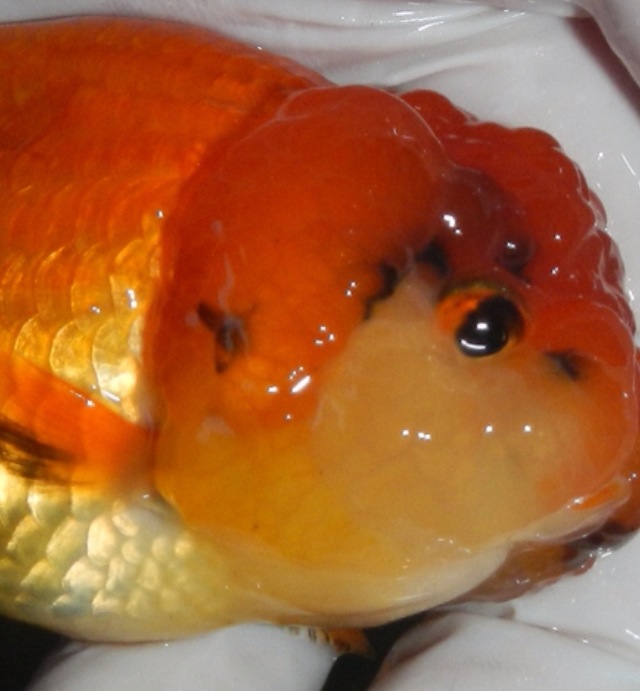
Chronic inflammatory lesions tend to have melanin deposits as is shown here with the multifocal black skin pigmentation. This fish is healing from previous skin ulcers attributed to gyrodactylosis (skin flukes). Note that the epidermal proliferation around the head is normal for this breed (ranchu). It is called a ‘wen’ or ‘hood’. Sometimes the ‘wen’ can grow so much that it’ll grow over the eyes causing obstruction to sight and will need to be surgically trimmed.

Gladstone Harbour fish deaths. The final report.

Some of you may be aware of the diseases and deaths of aquatic life in Gladstone Harbour. If not, follow this link to previous posts – https://thefishvet.com/?s=Gladstone&submit=Search

The final report can be downloaded here:

http://www.gladstoneobserver.com.au/news/report-accuses-dredges/1706828/ (or for a smaller file version, download the report using this link – FFVS Gladstone FINAL trustee version – sml).

There is also a 25 minute interview where aspects of the report are discussed at this site.

—
Yours sincerely,

Dr Richmond Loh
BSc BVMS MPhil MANZCVS (Aq & Pathol)
The Fish Vet, Perth, Western Australia.
Veterinary Medicine for fish.
http://www.thefishvet.com.au
Ph: +61 (0)421 822 383

Giant tuna sells for record 1.7 million in Japan.

Read more here –
http://mobile.news.com.au/breaking-news/world/giant-tuna-sells-for-record-17-million-in-japan/story-e6frfkui-1226548243904

How do you decide on feed formulation for potentially new aquaculture species?

When you don’t know anything about the new animal you’re growing, you need to get to know them better. In terms of establishing their dietary needs, you’d need to study the habits and observe what they eat in nature. You can also dissect some of the species and see what exactly are in their stomach contents to provide you with a clue on what they eat. Back at the lab, you can send bits and pieces for testing to see what amino acid and fatty acid profiles they have and this can help you better refine the diet.

For octopi, it seems like sending their guts for testing will give you a good fatty acid profile of their dietary requirements.


Aquaculture Research
Volume 44, Number 1 (December 2012)
Efficient utilization of dietary lipids in Octopus vulgaris(Cuvier 1797) fed fresh and agglutinated moist diets based on aquaculture by-products and low price trash species
Authors: Juan Estefanell, Javier Roo, Rafael Guirao, Juan Manuel Afonso, Hipólito Fernández-Palacios, Marisol Izquierdo, Juan Socorro
Author Affiliations:
no affiliations available
Source: Aquaculture Research, Volume 44, Number 1 (December 2012)
Page Numbers: 93 – 105
Available Full Text:
Full Text: Subscription Required to view full text
Format: PDF
Size: unknown
Location: Publisher’s Site
Authentication: EBSCOhost EJS
Abstract: The aim of this study was to evaluate growth, biochemical composition and dietary nutrients utilization in Octopus vulgarisfed on four diets based on bogue Boops boops, from different origin and in two presentations: fresh discarded bogue (aquaculture by-product) (DB-f), fresh wild bogue (low price trash species) (WB-f), discarded bogue agglutinated moist diet (DB-m) and wild bogue agglutinated moist diet (WB-m). Diets based on DB showed higher lipid content (19–26% dw) than those based on WB(5–6% dw). Octopuses fed on DB-based diets showed higher growth (1.5–1.9% day-1) and higher protein efficiency ratio (0.64–0.69) than those fed on WB-based diet (1.1–1.5% day-1and 0.36–0.37 respectively), which suggests good utilization of dietary lipids and also a possible protein sparing effect by lipids in O. vulgaris. Octopuses fed on diets presented fresh showed a higher growth (1.9–1.5% day-1) and a higher feed efficiency (62–65%) than those fed on agglutinated diets (1.1–1.5% and 52–60% day-1respectively). Regarding fatty acids, the digestive gland clearly reflected dietary lipid and fatty acid profile, while muscle showed a more stable composition. Low dietary ARA content reflected in octopus tissues, especially in specimens fed on DB-based diets, which did not seem to affect growth during the experimental period.
Citation: Juan Estefanell, Javier Roo, Rafael Guirao, Juan Manuel Afonso, Hipólito Fernández-Palacios, Marisol Izquierdo, Juan Socorro . Efficient utilization of dietary lipids in Octopus vulgaris(Cuvier 1797) fed fresh and agglutinated moist diets based on aquaculture by-products and low price trash species. Aquaculture Research, Volume 44, Number 1 (December 2012), pp. 93-105, <http://ejournals.ebsco.com/direct.asp?ArticleID=41F09E7AF2CCE8D3A292&gt;
URL: http://ejournals.ebsco.com/direct.asp?ArticleID=41F09E7AF2CCE8D3A292

Christmas Island’s Red Crab migration is predicted to be this Sunday.

Read more about the events from this fact sheet –

Viewing the Red Crab spawning in 2013.pdf

Ginseng for fish.

Research shows that there is demonstrable disease resistance in fish fed ginseng (for those who doubt herbal medicines, check out this link to my previous post to see how it works).

If it’s good enough for fish, I should probably try some on myself!


Journal of Applied Aquaculture
  Volume 24, Number 4 (December 2012)
     The Use of American Ginseng (Panax quinquefolium) in Practical Diets for Nile Tilapia (Oreochromis niloticus): Growth Performance and Challenge with Aeromonas hydrophila.
   Authors: Mohsen Abdel-Tawwab 1
   Author Affiliations:
 1: Department of Fish Biology and Ecology, Central Laboratory for Aquaculture Research
   Source: Journal of Applied Aquaculture, Volume 24, Number 4 (December 2012)
   Page Numbers: 366 – 376
   Available Full Text:
Full Text: Subscription Required to view full text
Format: PDF
Size: unknown
Location: Publisher’s Site
Authentication: EBSCOhost EJS
   Abstract: This study was carried out to evaluate the effect of American ginseng (AG), Panax quinquefolium,on growth and resistance to Aeromonas hydrophila in Nile tilapia, Oreochromis niloticus. Ginseng was included in practical test diets at rates of 0.0 (control), 0.50, 1.0, 2.0, or 5.0 g/kg diet. Fish (9.1 ± 0.3 g) were distributed into quadricated 100-L aquaria at a density of 20 fish per aquarium. Fish in all treatments were fed up to satiation twice daily for 8 weeks. After the feeding trial, fish of each treatment were intraperitoneally injected with pathogenic A. hydrophila and kept under observation for 10 days. Highest growth was obtained at 1.0 – 5.0 g AG/kg diet. The survival of fish challenged by A. hydrophila increased with increasing AG levels in fish diets. Cost-benefit analysis indicated that ginseng supplementation could reduce per kg costs by 15% with an optimum inclusion level of 2.0 g/kg.
   Citation: Mohsen Abdel-Tawwab . The Use of American Ginseng (Panax quinquefolium) in Practical Diets for Nile Tilapia (Oreochromis niloticus): Growth Performance and Challenge with Aeromonas hydrophila. Journal of Applied Aquaculture, Volume 24, Number 4 (December 2012), pp. 366-376, <http://ejournals.ebsco.com/direct.asp?ArticleID=4342A67658F746952D4F&gt;
   URL: http://ejournals.ebsco.com/direct.asp?ArticleID=4342A67658F746952D4F

Watch out for toxic algal blooms.

Toxic algal blooms can kill fish, crabs and birds but they seem to be able to avoid algae mats. Anabaena spp. produces neurotoxins and deaths result from paralysis of skeletal and respiratory muscles. Fish are often safe until a pond or dam dries or is drained down, bringing them in contact with floating algae. Fish may also die due to depletion of oxygen during algal blooms.

Check out Dr Loh’s video on toxic algae – http://youtu.be/5maKhOJAFTY