Turtle rehabilitation workshop – Sunday 28 April (09:00-16:30), Wilson, Western Australia.

If you’re free and would like to attend the workshop presented by Ruth Haight, click on the link below to download the detailed information.

Turtle Rehab Workshop Details.pdf

The worshop will cover these aspects of turtle rehabilitation:

  • Rescue and triage
  • Housing & equipment
  • Water quality
  • Diseases & injuries
  • Treatment & stress reduction
  • Diet & feeding techniques
  • Hatchlings & juvenils
  • Basic & advanced nursing
  • Release assessment
  • Release and relocation considerations

You may also wish to contact the organisers directly – http://www.turtleoblonganetwork.org.au/contact-us.html

Pea protein in the diet.

I often wonder why, after so many years, has noone thought of including peas into fish food. Could this be the perfect diet for goldfish in the prevention of swimbladder dysfunction? What’s more is that peas should be a much cheaper source of protein than fish meal.

In this article, researchers show that pea protein can substitute 35% of the fish meal, making it more economical for crayfish production.


Aquaculture
Volume 391, Number 2 (April 2013)
Replacement of fish meal by pea protein concentrate in practical diets for juvenile crayfish (Pacifastacus leniusculusDana, Astacidae) from the onset of exogenous feeding
Authors: J.B. Fuertes, J.D. Celada, J.M. Carral, M. Sáez-Royuela, Á. González-Rodríguez
Author Affiliations:
no affiliations available
Source: Aquaculture, Volume 391, Number 2 (April 2013)
Page Numbers: 159 – 164
Available Full Text:
Full Text: Subscription Required to view full text
Format: PDF
Size: Unknown
Location: Publisher’s Site
Authentication: Publisher’s Site
Abstract: The aim of this study was to evaluate different replacement levels of fish meal (FM) with pea protein concentrate (PPC) on survival and growth of juvenile crayfish (Pacifastacus leniusculus). A 100-day experiment was conducted with stage 2 juveniles from the onset of exogenous feeding. Four practical diets (50% crude protein) differing in the level of replacement of FM protein by PPC protein were prepared: 0% (control diet), 25% (20.2% dietary PPC), 35% (28.2% dietary PPC) or 45% (35.5% dietary PPC). Each diet was tested on grouped or individually isolated crayfish. The 25% or 35% replacement of FM protein by PPC protein resulted in survival (average of grouped and isolated: 83.6%) and growth (grouped and isolated: 14.44mm carapace length, 674.9mg weight) similar to those obtained with the control diet. Final growth of isolated crayfish was significantly higher than that of grouped crayfish with all diets. The relation among the amino acid profile of the diets, the performance of juveniles and the amino acid requirements determined for other crustacean species is discussed. The present study provides the first data on the substitution possibilities of FM by PPC in diets for freshwater crayfish. A 28.2% PPC (35% replacement of FM protein) can be included in formulated diets (50% crude protein) for juvenile P. leniusculusduring the first 100days of intensive rearing without impairing growth or feed conversion.
Citation: J.B. Fuertes, J.D. Celada, J.M. Carral, M. Sáez-Royuela, Á. González-Rodríguez . Replacement of fish meal by pea protein concentrate in practical diets for juvenile crayfish (Pacifastacus leniusculusDana, Astacidae) from the onset of exogenous feeding. Aquaculture, Volume 391, Number 2 (April 2013), pp. 159-164, <http://ejournals.ebsco.com/direct.asp?ArticleID=41D49E7F7FDDE3515FAC&gt;
URL: http://ejournals.ebsco.com/direct.asp?ArticleID=41D49E7F7FDDE3515FAC

A microscopic walk through – seahorse with bacterial enteritis and branchitis.

This is a case of a seahorse that had a period of inappetance, weight loss and a weak snick. For humane reasons, it was euthanased for laboratory analysis by The Fish Vet. Microscopically, there was severe, diffuse, subacute enteritis along its entire length, there were multifocal, acute, branchial necrosis with intralesional bacilli, occasional gill ciliates and marked, diffuse hepatocellular atrophy. In this video
we discuss what might be the primary cause of the disease and why we think so.

For notes about seahorse nutrition, follow this link to my blog – https://thefishvet.com/?s=seahorse+feed
With over 1000 blog posts, who knows what other gems of knowledge lie there!

Fish joke for Monday-itis: Salt

Q: Why do fish live in salt water?

A: Because pepper makes them sneeze!

Ok, I’m really running out of jokes. I’ve to admit this one’s pretty lame.

Tassie oysters wear their heart on their shells.

They’ve developed bio-sensors that that can measure the heartbeat of an oyster to see how they respond to changes in their environment such as temperature and salinity levels.
Why? To help the aquaculture industry improve productivity and manage risks.

Learn more here – http://csironewsblog.com/2013/02/21/tassie-oysters-wear-their-heart-on-their-shells/

I see the light! Using submerged lights to control salmon swimming depths. What are the applications?

Light is a very interesting thing.  The most common general uses for lighting in aquaculture include altering photoperiods are used for breeding and increasing the photoperiod for increased feeding and hence, growth. In Artemia culture, it is used to separate the cysts from the newly hatched nauplii by using light to attract them to your dispenser. But did you know that salmon can be coaxed to do the same thing? This article talks about its application to improve salmon growth. But what about this other application?

When I was working in Tasmania as a fish pathologist, almost every summer, at least some salmon pens would be hit by jellyfish stingers. The jellyfish tend to float along the top during the day and waft along with the water currents. Sometimes the water currents direct them towards the fish pens and their stingers come into contact with the fish, either directly or like a carrot through the grater, they break up as they pass through the nets. It is not always possible or practical to move the pens away from the arriving jellyfish. What else could we do? In such events, could you use light to attract the salmon to the depths and thus avoid contact with the jellyfish?  It’s definitely worth a try.

Aquaculture
  Volume 391, Number 2 (April 2013)
     Modelling of Atlantic salmon (Salmo salarL.) behaviour in sea-cages: Using artificial light to control swimming depth
   Authors: Martin Føre, Tim Dempster, Jo Arve Alfredsen, Frode Oppedal
   Author Affiliations:
no affiliations available
   Source: Aquaculture, Volume 391, Number 2 (April 2013)
   Page Numbers: 137 – 146
   Available Full Text:
Full Text: Subscription Required to view full text
Format: PDF
Size: Unknown
Location: Publisher’s Site
Authentication: Publisher’s Site
   Abstract: Submerged artificial light sources are commonly used to control sexual maturation in farmed Atlantic salmon, but may also be a tool to steer salmon to swim at depths which are optimal for production. In this study, we used an individual-based model of the behaviour of salmon toward environmental variability to simulate the swimming depths of salmon in different seasons, production environments and artificial light regimes. Model outputs agreed with direct observations of salmon swimming depths from literature, suggesting that the model accurately simulated the behavioural mechanisms behind responses toward artificial lights superimposed upon different environmental conditions. We used the model in a series of in silico experiments to predict the behavioural effects of submerged artificial lights placed at different depths in environmental conditions typical for coastal waters in winter, spring and summer. The model indicated that artificial lights controlled salmon swimming depths most efficiently in winter. Further, lights may be more efficient in sites with a more homogeneous environment throughout the water column (e.g. open coast) than sites that are thermally stratified (e.g. fjords). Placing submerged lights at the right depths could produce better culture conditions, ultimately resulting in increased growth. With standard measurements of temperature at several depths as a sole user input, the model could act as a tool to inform farmers of which depths to place their lights on any given day or season.
   Citation: Martin Føre, Tim Dempster, Jo Arve Alfredsen, Frode Oppedal . Modelling of Atlantic salmon (Salmo salarL.) behaviour in sea-cages: Using artificial light to control swimming depth. Aquaculture, Volume 391, Number 2 (April 2013), pp. 137-146, <http://ejournals.ebsco.com/direct.asp?ArticleID=4764ABC6CAF1C6005D07&gt;
   URL: http://ejournals.ebsco.com/direct.asp?ArticleID=4764ABC6CAF1C6005D07

A microscopic walk through, bacterial enteritis in a sick freshwater cichlid fish.

This is a case of a freshwater cichlid that was looking gaunt, produced little amounts of pale/white faeces. It was euthanased for laboratory analysis by The Fish Vet. Microscopically, there was severe, diffuse, subacute, enteritis and a mild to moderate degree of hepatocellular atrophy. Citrobacter freundii was isolated on cultures. This bacteria tends to be a secondary invader, but has been implicated as primary pathogens too. It can be found in eutrophic freshwater or seawater. True to the textbook, the antibiotic sensitivity tests (disc diffusion method) on this isolate indicate that it is resistant to a multitude of antibiotics, and is sensitive only to enrofloxacin. This means that you would not get a cure if you were to use any other kind of antibiotics. This case is discussed in the video with practical advice on management.

Check out my latest Youtube video here –

http://youtu.be/PWymdvjr828

Follow me on: Facebook "Fin Page"YouTubeBlogLinkedinTwitter


Yours sincerely,

Dr Richmond Loh DipProjMgt, BSc, BVMS, MPhil (Pathology) Murdoch, MANZCVS (Aquatics & Pathobiology).
Veterinarian | Adjunct Lecturer Murdoch University | WAVMA President-Elect |
Secretary Aquatic Animal Health Chapter – Australian and New Zealand College of Veterinary Scientists (ANZCVS).
The Fish Vet, Perth, Western Australia, AUSTRALIA. Mobile Veterinary Medical & Diagnostic Services for fish and other aquatic creatures.
http://www.thefishvet.com.au
Ph: +61 (0)421 822 383

Looking for more books? Check out this site.

What are the temperature requirements for rainbow trout (Oncorhyncus mykiss)?

Now we are approaching the cooler months of the year in the southern hemisphere and backyard aquaponics guys will be stepping down their barramundi culture and will be starting to look at sourcing rainbow for the winter months.

So, why this change from barramundi to rainbow trout? This is because their temperature requirements are different. In a previous post, I outlined the temperature requirements for barramundi (Lates calcarifer) (link to previous post). But to summarise the findings, the optimal temperature range is 26-32°C and their tolerance range is 15-37°C. This is why they make a good summer crop in Perth and harvesting should be underway.

But what about rainbow trout? In “Fish Vetting Essentials”, we published that the optimal temperature range for rainbow trout is 14-18°C and their tolerance range of 1 – 25°C. The Food and Agriculture Authority (FAO) publishes optimal temperature ranges of 9 – 21°C and a tolerance range of 0 – 27°C (link to source). The Department of Primary Industries Victoria considers the optimum water temperature range is 10 – 22°C and a tolerance range of 0 – 30°C (link to source). The Southern California Edison who published a literature review on (rainbow) Trout Temperature Requirements found that the upper incipient lethal temperature (UILT) for rainbow trout is within the range 25 – 30°C, but were able to maintain weight at 25°C for 30 days (link to source).

The combined experiences of myself and my co-author of “Fish Vetting Essentials” are that the water temperatures in Tasmania this summer (2012/2013) hit 25oC. Whilst it did stress the trout, most survived. We have clients with aquaponics setup who do not experience any signs of ill-health in their rainbow trout until the water temperature exceeds 24-25oC. There was another case at a hatchery in Victoria where most fish survived despite the water temperature reaching 25oC during the summer of 2009.

So, what’s the correct “optimal” and “tolerance” ranges? Well, you’ll have to decide on these based on a combination of literature reviews of natural occurrences and experimental data, and professional experience. Note that the natural optimal and tolerance ranges of any species are a lot wider than their commercial production values. Having revisited my published data, I am staying firm with our published optimal and tolerance temperature ranges for rainbow trout (i.e. optimal as 14-18oC, and tolerance as 1-25oC), although the research shows they can tolerate up to 30oC! I guess that these ranges can be extended or restricted within biological limits, and will also be influenced by genetic differences, other environmental parameters, health and nutrition and so on and so forth.

So, what does all this mean for you? With outdoor pond water temperatures at the moment of below 25oC, the time is about right for stocking rainbow trout, but make sure you monitor the water temperature that it you don’t continue to rear the fish when the water temperatures rise again during late spring.


Picture source.

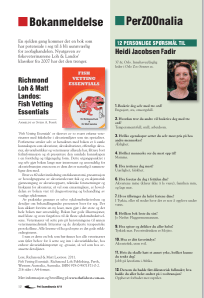
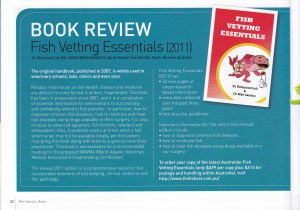
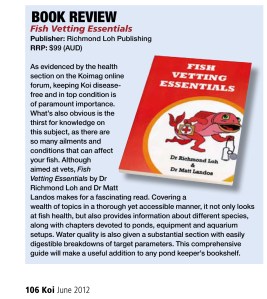
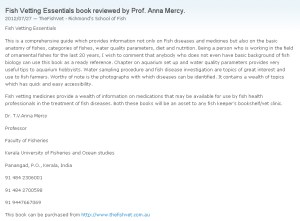
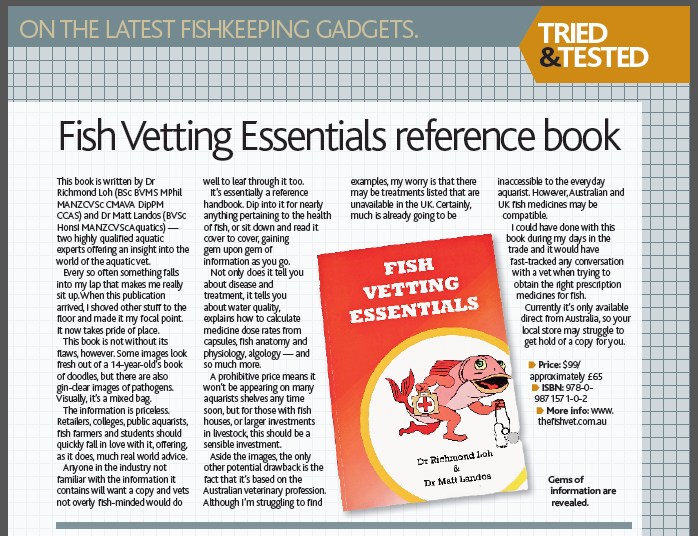
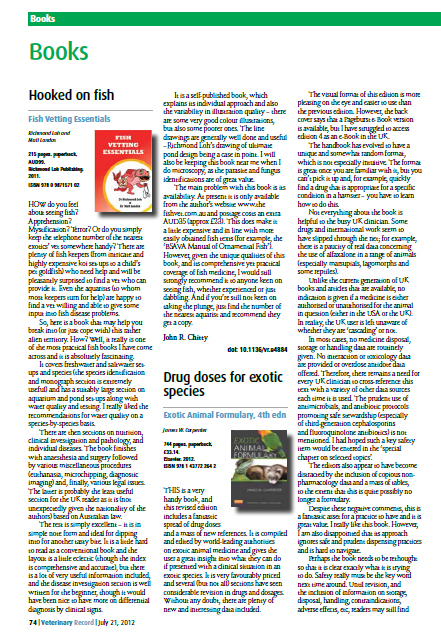
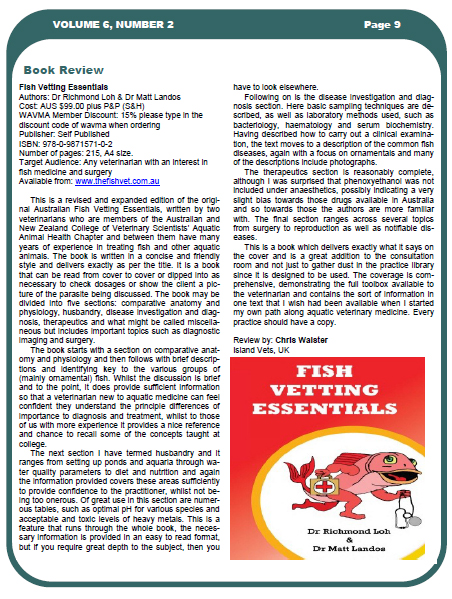
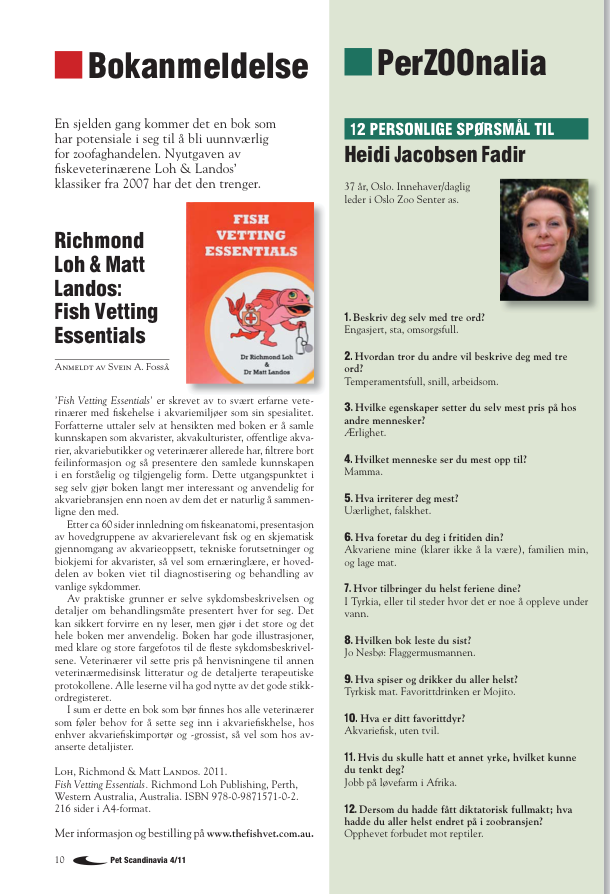
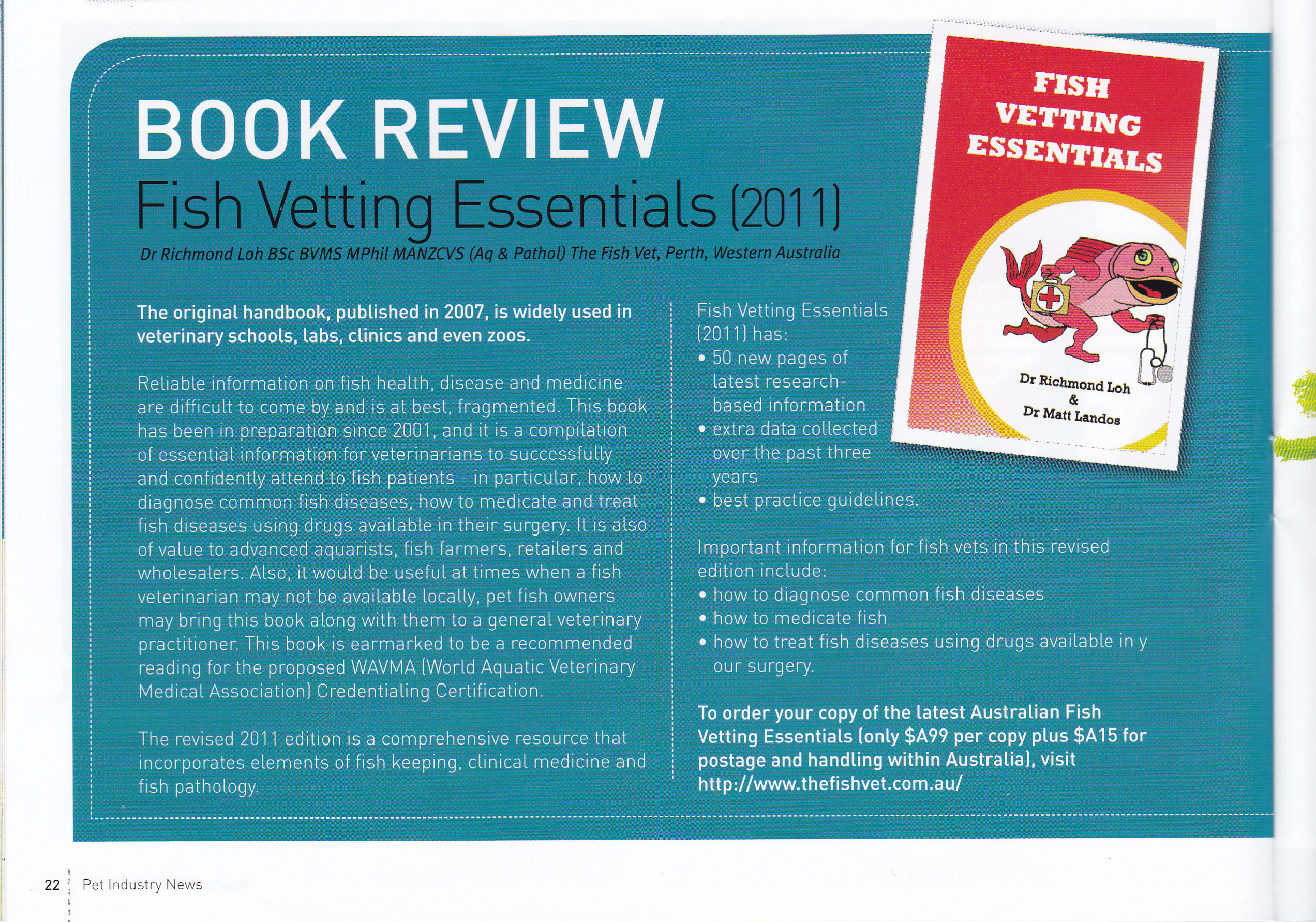
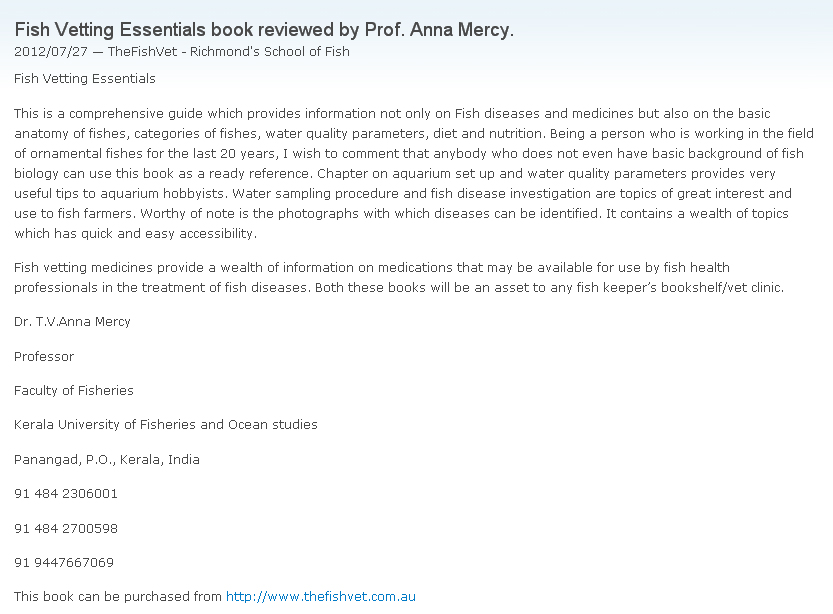
Fish Vetting Essentials – What do the experts around the world say? Book reviews and testimonials.

I’m a bit biased, but I’d have to say that this is the most practical book that’s currently available on the medical aspects of fish health. The information published in “Fish Vetting Essentials” a combination of literature reviews of natural occurrences, experimental data and professional real life experience. The inclusion of the latter means that some of this information is not found elsewhere and it is the unique point of difference.

View free sample pages here – eFishVetEssentialswLinks.

Get your copy of the latest Fish Vetting Essentials (only $A99 per copy plus $A15 for postage and handling within Australia), now at www.thefishvet.com.au or click here to proceed directly to the shopping cart.


PRACTICAL FISH KEEPING
Practical Fish Keeping

VETERINARY RECORD

Vet Record

WORLD AQUATIC VETERINARY MEDICAL ASSOCIATION

World Aquatic Veterinary Medical Association

PET SCANDINAVIA

Pet Scandinavia

PET INDUSTRY NEWS

Pet Industry News

KOI

Koi

PROF. ANNA MERCY

Prof. Anna Mercy

Testimonials

I use “Fish Vetting Essentials” as my first reference for matters pertaining to aquatic animal health. Its clear, concise layout and colour photographs make it a highly practical source of information. The information on diagnostic sample collection and treatment is easy to follow and has enabled us to develop the skills necessary to manage disease cases in fish effectively. I highly recommend “Fish Vetting Essentials” for veterinarians dealing with aquatic species.

Dr Simone Vitali BSc, BVMS, PhD, MACVS (Zoo Animal Medicine), Senior Veterinarian, Perth Zoo.

<><

I have owned a veterinary general practice for 30 years and my copy of Fish Vetting Essentials has been an excellent resource for me when I am asked to treat exotic aquarium fish. Previously the only readily available information on treating and diagnosing fish were anecdotal, unreliable and outdated popular press publications or high-end scientific material that was not useful from a practical point of view. Fish Vetting Essentials is concisely written and contains everything a general practitioner needs to take a logical, helpful approach to aquarium fish problems.

Dr Owen Lavers BVSc, Earlville Vet Surgery, Queensland.

<><

As a veterinary clinician with an interest in the “unusual and exotic” fish species, I am frequently asked to consult with clients who present their fish for examination, diagnosis and treatment. I have an extensive medical library, and Fish Vetting Essentials is by far the most useful reference on fish diseases and fish treatments.

Dr James M Harris BSc, DVM, FRSPH, Mayfair Veterinary Clinic, Tasmania.

<><

FishVetEssentials_2011 eSample.pdf

Watch Dr Loh talk about what’s in the book and how it’s organised – click here.

To order your copy of the latest Fish Vetting Essentials, visit thefishvet.com.au or click here to proceed directly to the shopping cart.

Feel free to pass it on to others who you think might be interested.

Seavet Distribution list for ISSI – request for questions.

As you know, I have been awarded The George Alexander Foundation International Fellowship, officiated by the International Specialised Skills Institute (http://www.issinstitute.org.au/). With that, I’ve registered to attend the Seavet course (http://conference.ifas.ufl.edu/ame/seavet/) during June 2013 in Florida, USA. The 2-week course will cover veterinary aspects of marine megafauna such as sharks, stingrays, fish, pinnipeds, cetaceans, manatees, turtles and penguins. I will also be visiting Hawaii Dept Agriculture, the University of Hawaii at Hilo and The University of Florida’s Tropical Aquaculture Laboratory in Ruskin, FL, USA.

It is my intention that I gather a list of relevant contacts so that I can disseminate the information upon my return as part of my Fellowship.  I would like to start collating any questions you may have for me to ask the experts, so that the information I’ll be disseminating will be relevant to you. I’ve started a Google Document that you may add your questions to, under the respective headings.

The virtual file will be called “Seavet 2013 Questions from ISSI Distribution List” and here is the link – http://tinyurl.com/couut99

Note that this file will be available to anyone with the link, so be careful not delete anyone else’s questions. Thank you for your interest and support.

Also, you may wish to register with my various social media platforms (see links below) for more informal chatter about aquatic animal health matters.


Follow me on: Facebook “Fin Page” YouTubeBlogLinkedinTwitter

Yours sincerely,

Dr Richmond Loh

DipProjMgt, BSc, BVMS, MPhil (Vet Path), MANZCVS (Aquatics), MANZCVS (Pathobiology).

Veterinarian | Adjunct Senior Lecturer Murdoch University | President-elect World Aquatic Vet Med Assoc|

Secretary Aquatic Animal Health Chapter – Australian and New Zealand College of Veterinary Scientists (ANZCVS)

The Fish Vet, Perth, Western Australia, AUSTRALIA. Mobile Veterinary Service for fish and other aquatic creatures.
http://www.thefishvet.com.au
Ph: +61 (0)421 822 383