A sad report. Read more at this link – http://mobile.news.com.au/national-news/secret-images-reveal-grisly-sea-lion-deaths-in-fishing-nets/story-fncynjr2-1226641479744
Welfare considerations for fasting fish.
This is an interesting read. I often get questioned by fish owners about how long can you go on holidays without getting someone in to feed your fish. It’s a very good question and is difficult to answer. The greatest issue with getting someone in to feed your fish is that very often, they are overfed. The uneaten food will pollute the water and you get mass mortalities. This would be a disaster!
On the other hand, if you don’t get someone in to feed your fish, how long can you do this for? This experiment shows that, in rainbow trout at least, there are no welfare issues with fasting for up to 3 days (58.0°C days).
| Aquaculture | |||||||||||||||||
| Volume 401, Number 24 (June 2013) | |||||||||||||||||
 |
Short-term fasting and welfare prior to slaughter in rainbow trout, Oncorhynchus mykiss | ||||||||||||||||
| Authors: | J. López-Luna, L. Vásquez, F. Torrent, M. Villarroel | ||||||||||||||||
| Author Affiliations: |
|
||||||||||||||||
| Source: | Aquaculture, Volume 401, Number 24 (June 2013) | ||||||||||||||||
| Page Numbers: | 142 – 147 | ||||||||||||||||
| Available Full Text: |
|
||||||||||||||||
| Abstract: | Fasting fish before slaughter is a common practice in aquaculture but it is not clear how long rainbow trout can be starved before suffering unnecessary stress, nor at what moment of the day slaughter is least stressful. We fasted 90 rainbow trout (Oncorhynchus mykiss; initial average weight 215.0±22.6g) for 24, 48 and 72h (19.5, 38.8 and 58.0°Cdays) and slaughtered them in the morning (08h00), afternoon (14h00) and night (20h00) to observe the effect of fasting duration and slaughter time on welfare indicators, including plasma cortisol, glucose and lactate concentrations as well as hematocrit and leucocyte count. The values of the fasted fish were compared with 90 control fish kept under similar conditions but not fasted. Body weight was not significantly different between fasted fish and controls during the trial but the relative weight of the gut was higher in control trout. Cortisol levels were similar between fasted and control fish and among the treatment groups. Similar results were found for glucose and lactate concentrations in plasma. Hematocrit values were also normal and similar between fasted fish and controls throughout the experiment, but leucocyte count was slightly lower in fasted fish by day three. There were no clear differences in any of the stress parameters in the morning, afternoon and night in either treatment. These results suggest that rainbow trout can cope with fasting up to three days (58.0°Cdays) prior to slaughter and that their welfare is therefore not seriously compromised. | ||||||||||||||||
| Citation: | J. López-Luna, L. Vásquez, F. Torrent, M. Villarroel . Short-term fasting and welfare prior to slaughter in rainbow trout, Oncorhynchus mykiss. Aquaculture, Volume 401, Number 24 (June 2013), pp. 142-147, <http://ejournals.ebsco.com/direct.asp?ArticleID=43908152186A7DB49505> | ||||||||||||||||
| URL: | http://ejournals.ebsco.com/direct.asp?ArticleID=43908152186A7DB49505 | ||||||||||||||||
Fish Joke for Monday-itis: mermaids
At the recent manta ray night dive trip at Kona, Hawaii, the dive master told us a joke. I thought of share it with you.
Q: Why do mermaids wear seashells?
A: Because B-shells are too small, and D-shells are too big!
How was it discovered that the cultured puffer fish is not poisonous?
This was such an interesting story shared by Professor Teruo Miyazaki during his round Australia presentations.
Traditionally, fugu (literal translation means ‘river pig’) was only allowed to be served by the certified Japanese chefs who were trained to remove the poisonous parts of the fish. The tetradotoxin is normally present in high amounts in the liver, skin and gonads of the fish; where 1g of liver is sufficient to kill two adult humans! Why would people knowingly eat such a fish? I guess the flesh is delicious and it’s the thrill of playing ‘Russian roulette’, Japanese style!
So this is how the story goes… One day, a tiger puffer fish farmer brought home some of the fish and some of the fish that had died were tossed out in his yard. Then a neighbours dog came by and ate the fish! The fish farmer became distressed and was extremely apologetic to his neighbour, that his dog would die from the poisonous meal. But the next day, the farmer couldn’t believe his eyes when he saw the dog was waking around, unharmed and ‘undead’! That’s very strange because the number of fish it ate would have killed the dog 10 times over. So the farmer fed the dog the fish on two other occasions and the dog survived! He then took it upon himself to eat the fish. He thought that the flesh and liver of the fish were delicious, and did not suffer intoxication. He then brought some of the cultured fish to the university to examine for the presence of toxin and it was found to be negative!
The scientists were puzzled over this finding. The wild caught puffers contained the toxin, whereas those that were cultured did not. How and why can this be so?
Further investigation revealed that the puffer fish do not manufacture their own toxins, but they obtain their toxin from grazing on benthic organisms, absorbing and concentrating it in their liver, gonad and skin!
And so, this is how it was discovered that the aquacultured fugu fish is non-toxic. Interesting huh?
How’s The Fish Vet going with his trip around Hawaii?
I’ve met a whole heap of fishy people. From a private veterinarian who deals with Disney Aulani Hotel, to the Dept of Agriculture colleagues who deal with regulation. I’ve met some of the personnel at the University of Hilo who run the aquaculture program and met the lead scientists and managers at several establishments.
I have visited the largest gene bank of sygnathids (seahorse-type animals) in the world, biggest koi farm in USA, biggest aquaponics farm in USA (or even the world!), biggest abalone farm in USA and lots more! Today I’ll be attending an unplanned, one day conference on Aquaponics in Honolulu. It was an opportunity too good to pass by. There are over 200 registrants for this course. All this in Hawaii, in just the first week of my trip!
Stay tuned for what I see and do when I head to Florida next week!

—
Yours sincerely,
Dr Richmond Loh
DipProjMgt, BSc, BVMS, MPhil (Pathology) Murdoch, MANZCVS (Aquatics& Pathobiology).
The Fish Vet, Perth, Western Australia.
Veterinary Medicine for fish.
W: http://www.thefishvet.com.au
E: thefishvet
P: +61 (0)421 822 383
Ginger as an immunostimulant – strengthens the non-specific immunity and reduces susceptibility to bacterial infections.
Recently, I’ve created “immunoBOOSTER” (see link) which is product that can be used as an additive to fish food as a form of preventive medicine. I’ve seen it work and I am now taking a greater interest in scientific publications in this field.
| Create Alert Add to Favorites Mark | |||||||||||||||||
| Aquaculture | |||||||||||||||||
| Volume 401, Number 24 (June 2013) | |||||||||||||||||
| |
Nutritional effects of ginger (Zingiber officinaleRoscoe) on immune response of Asian sea bass, Lates calcarifer(Bloch) and disease resistance against Vibrio harveyi | ||||||||||||||||
| Authors: | Allah Dad Talpur, Mhd Ikhwanuddin, Abol-Munafi Ambok Bolong | ||||||||||||||||
| Author Affiliations: |
|
||||||||||||||||
| Source: | Aquaculture, Volume 401, Number 24 (June 2013) | ||||||||||||||||
| Page Numbers: | 46 – 52 | ||||||||||||||||
| Available Full Text: |
|
||||||||||||||||
| Abstract: | The present study was aimed at determining the effects of ginger (Zingiber officinale Roscoe) as feed additive on Asian sea bass, Lates calcarifer culture. Experimental diets containing ginger 1, 2, 3, 5 and 10g/kg of feed were fed to L. calcarifer and control was fed with no ginger. After the feeding trial for 15days, fish were challenged with Vibrio harveyi and mortality was recorded for two weeks. Ginger diet led to control of experimental infection in L. calcarifer. Highest survival (86.6%) was achieved in groups fed with ginger at 5 and 10g/kg feed respectively, compared to the control (26.7%). In addition, there was a significant increase in weight gain, growth and feed conversion in those fish fed ginger diet. Ginger diet influenced the haematological parameters, biochemical indices and immunological activities. The number of erythrocytes (RBC) and leucocytes (WBC) was significantly (p<0.05) higher in the groups fed ginger diet compared to the control. The blood glucose level, lipid, triglyceride and cholesterol levels were relatively lower in treated groups compared with the control. Phagocytic, respiratory burst, lysozyme, bactericidal and antiprotease activities were significantly increased in ginger fed groups compared with the control. The results of this study demonstrated that dietary ginger doses might strengthen the non-specific immunity and reduce susceptibility to V. harveyi. | ||||||||||||||||
| Citation: | Allah Dad Talpur, Mhd Ikhwanuddin, Abol-Munafi Ambok Bolong . Nutritional effects of ginger (Zingiber officinaleRoscoe) on immune response of Asian sea bass, Lates calcarifer(Bloch) and disease resistance against Vibrio harveyi. Aquaculture, Volume 401, Number 24 (June 2013), pp. 46-52, <http://ejournals.ebsco.com/direct.asp?ArticleID=4817B0509B56624FF884> | ||||||||||||||||
| URL: | http://ejournals.ebsco.com/direct.asp?ArticleID=4817B0509B56624FF884 | ||||||||||||||||
Effects of melamine toxicosis in tilapia.
Protein content in food is often indirectly measured by examining for the nitrogen content. But, some unscrupulous people thought they could trick the system by adulterating foods with melamine, to falsify the nitrogen content of feeds. But melamine is a plastic and there are grave consequences when ingested (with cyanuric acid) by animals. First reports of melamine toxicosis came after the Beijing Olympics when babies fed adulterated milk powder started dying from melamine associated nephrosis.
This paper reports the range of ailments tilapia show when fed different concentrations of adulterated food. They include lower growth rate, fin erosion, anorexia, sluggish swimming behaviour, paling/darkening of skin and mortalities. Microscopically, alterations were evident in the kidney, liver and gills.
Why is it important to know this? It’s because some if this substance is still floating around in the world, especially in China.
| Journal of Fish Diseases | |||||||||||||||||
| Volume 36, Number 6 (June 2013) | |||||||||||||||||
| |
Toxicity of melamine, an adulterant in fish feeds: experimental assessment of its effects on tilapia. | ||||||||||||||||
| Authors: | W Phromkunthong, N Nuntapong, M Boonyaratpalin, V Kiron | ||||||||||||||||
| Author Affiliations: |
|
||||||||||||||||
| Source: | Journal of Fish Diseases, Volume 36, Number 6 (June 2013) | ||||||||||||||||
| Page Numbers: | 555 – 568 | ||||||||||||||||
| Available Full Text: |
|
||||||||||||||||
| Abstract: | Unscrupulous inclusion of melamine in fish feeds can be harmful to fish and may be hazardous to human health. An eight-week feeding trial examined the effects of melamine (inclusion levels; 5–30 g kg-1feed) on the growth performance, feed efficiency, histopathological changes and melamine residues in sex-reversed red tilapia, Oreochromis niloticus(L.) × O.mossambicus(Peters). Fish which received melamine-containing feeds grew less, utilized feeds less efficiently and performed poorly, besides exhibiting defects such as fin erosion, anorexia, sluggish swimming behaviour, paling/darkening of skin and low survival. Melamine concentration in the fish reflected its inclusion level in the feeds, and the content was higher in the viscera than in the fish fillet or whole fish. Histopathological alterations were evident in the kidney, liver and gills of fish subjected to melamine treatment – the severity of lesions corresponded to its dosage. Enlargement of renal tubules was observed in the kidney of fish fed with =10 g melamine kg-1feed, although, crystals were not deposited. Fish subjected to melamine insult had more prominent lesions in liver than in kidney. Toxic effects on the gills manifested as epithelial hyperplasia of the primary and secondary lamellae. The anomalies were severe at higher intake levels of melamine. | ||||||||||||||||
| Citation: | W Phromkunthong, N Nuntapong, M Boonyaratpalin, V Kiron . Toxicity of melamine, an adulterant in fish feeds: experimental assessment of its effects on tilapia. Journal of Fish Diseases, Volume 36, Number 6 (June 2013), pp. 555-568, <http://ejournals.ebsco.com/direct.asp?ArticleID=4E69B0B7174FFBD5F5B0> | ||||||||||||||||
| URL: | http://ejournals.ebsco.com/direct.asp?ArticleID=4E69B0B7174FFBD5F5B0 | ||||||||||||||||
Imported ornamental fish are colonised with antibiotic-resistant bacteria!
This is not a surprise, given that many ornamental fish exporters routinely use prophylactic medicines prior to shipping out fishes. Tetracycline and triple sulfa are the most commonly used antibiotics because they’re relatively cheap and easily accessible. The frequency and quantities used are high and it is expected that bacteria will most likely become resistant to these drugs. Thus, when I see fish with bacterial infections, these are the drugs I would stay far away from if I want to have success in treating them.
| Journal of Fish Diseases | |||||||||||||||||
| Volume 36, Number 6 (June 2013) | |||||||||||||||||
| |
Imported ornamental fish are colonized with antibiotic-resistant bacteria | ||||||||||||||||
| Authors: | S Rose, R Hill, L E Bermudez, T Miller-Morgan | ||||||||||||||||
| Author Affiliations: |
|
||||||||||||||||
| Source: | Journal of Fish Diseases, Volume 36, Number 6 (June 2013) | ||||||||||||||||
| Page Numbers: | 533 – 542 | ||||||||||||||||
| Available Full Text: |
|
||||||||||||||||
| Abstract: | There has been growing concern about the overuse of antibiotics in the ornamental fish industry and its possible effect on the increasing drug resistance in both commensal and pathogenic organisms in these fish. The aim of this study was to carry out an assessment of the diversity of bacteria, including pathogens, in ornamental fish species imported into North America and to assess their antibiotic resistance. Kidney samples were collected from 32 freshwater ornamental fish of various species, which arrived to an importing facility in Portland, Oregon from Colombia, Singapore and Florida. Sixty-four unique bacterial colonies were isolated and identified by PCRusing bacterial 16Sprimers and DNAsequencing. Multiple isolates were identified as bacteria with potential to cause disease in both fish and humans. The antibiotic resistance profile of each isolate was performed for nine different antibiotics. Among them, cefotaxime (16% resistance among isolates) was the antibiotic associated with more activity, while the least active was tetracycline (77% resistant). Knowing information about the diversity of bacteria in imported ornamental fish, as well as the resistance profiles for the bacteria will be useful in more effectively treating clinical infected fish, and also potential zoonoses in the future. | ||||||||||||||||
| Citation: | S Rose, R Hill, L E Bermudez, T Miller-Morgan . Imported ornamental fish are colonized with antibiotic-resistant bacteria. Journal of Fish Diseases, Volume 36, Number 6 (June 2013), pp. 533-542, <http://ejournals.ebsco.com/direct.asp?ArticleID=4DD981915AC7F935019A> | ||||||||||||||||
| URL: | http://ejournals.ebsco.com/direct.asp?ArticleID=4DD981915AC7F935019A | ||||||||||||||||
The science behind using alfaxalone as a sedative and anaesthetic in goldfish.
It’s great that clinical veterinarians are able to get into fish medicine with what they already stock in their pharmacy. Alfaxalone is a commonly used drug for cats and dogs and it can also be used to sedate or anaesthetise fish!
| Aquaculture | |||||||||||||||||
| Volume 399, Number 2 (June 2013) | |||||||||||||||||
| |
Evaluation of the sedative and anaesthetic effects of five different concentrations of alfaxalone in goldfish, Carassius auratus | ||||||||||||||||
| Authors: | S.H. Bauquier, J. Greenwood, T. Whittem | ||||||||||||||||
| Author Affiliations: |
|
||||||||||||||||
| Source: | Aquaculture, Volume 399, Number 2 (June 2013) | ||||||||||||||||
| Page Numbers: | 119 – 123 | ||||||||||||||||
| Available Full Text: |
|
||||||||||||||||
| Abstract: | Anecdotal publications describe induction of anaesthesia in fish with alfaxalone. This study’s objective was to determine the water concentrations of alfaxalone required to sedate and anaesthetise goldfish. The study was conducted as an unmasked, parallel design, randomised trial with five groups each of six healthy goldfish, Carassius auratus.Fish with a mean length (±SD) of 8.5 (±2.5) cm were immersed in individual water tank with controlled temperature (23–25°C), pH (6.8–7.2) and osmolality (38–45mOsm/L), at concentrations of 0.15, 0.5, 2.0, 5.0 and 7.5mg alfaxalone per litre, complexed with hydroxypropyl-beta cyclodextrin. Monitoring of fish included body approach reaction, maintenance of equilibrium, operculum movement and response to noxious stimuli. Depth of anaesthesia was determined using a modified published scale. A concentration of 0.15mg alfaxalone/L water was insufficient to induce sedation or anaesthesia. Mean sedation induction time±SD (range) after immersion at concentrations of 0.5 and 2.0mg alfaxalone/L were 37±7 (34–50) min and 7±1 (5–8) min respectively. Anaesthesia was not achieved at those concentrations. After immersion in water containing 5.0 and 7.5mg alfaxalone/L mean sedation induction times were 4±2 (2–6) min and 2±1 (1–2) min respectively, mean anaesthesia induction times were 28±8 (16–35) min and 14±2 (12–18) min respectively and mean full recovery times were 32±18 (20–67) min and 36±13 (23–53) min respectively. No adverse events were seen. The lowest water concentrations of alfaxalone identified to induce sedation and anaesthesia in goldfish (C. auratus) were 0.5mg/L and 5mg/L respectively. | ||||||||||||||||
| Citation: | S.H. Bauquier, J. Greenwood, T. Whittem . Evaluation of the sedative and anaesthetic effects of five different concentrations of alfaxalone in goldfish, Carassius auratus. Aquaculture, Volume 399, Number 2 (June 2013), pp. 119-123, <http://ejournals.ebsco.com/direct.asp?ArticleID=4D8682E08F9AEDDE8B0B> | ||||||||||||||||
| URL: | http://ejournals.ebsco.com/direct.asp?ArticleID=4D8682E08F9AEDDE8B0B | ||||||||||||||||
Are your fish coming down with ulcers?
You may like to use topical medications for a cure. But these medicines such as betadine and mercurochrome wash off as soon as the fish is put back in the water? This would mean that there is no residual activity to protect the fish from bacterial re-infection. Is there a way of making the drugs ‘stick’ to the wound?
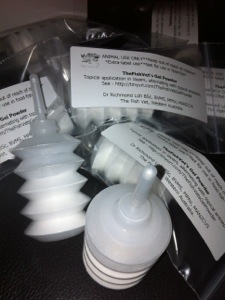
Yes there is. New stock of Gel Powder have arrived just in time. This powder, when applied to the wound will adhere firmly to the fish’s slippery skin, as well as absorbing the topical antiseptic. This forms a barrier that lasts more than just a few seconds in the water.
See a video on how it works by clicking here.