Q: What is a fish doing when he thinks?
A: He PONDers.
All about Fish Vetting – Dr Richmond Loh
Q: What is a fish doing when he thinks?
A: He PONDers.
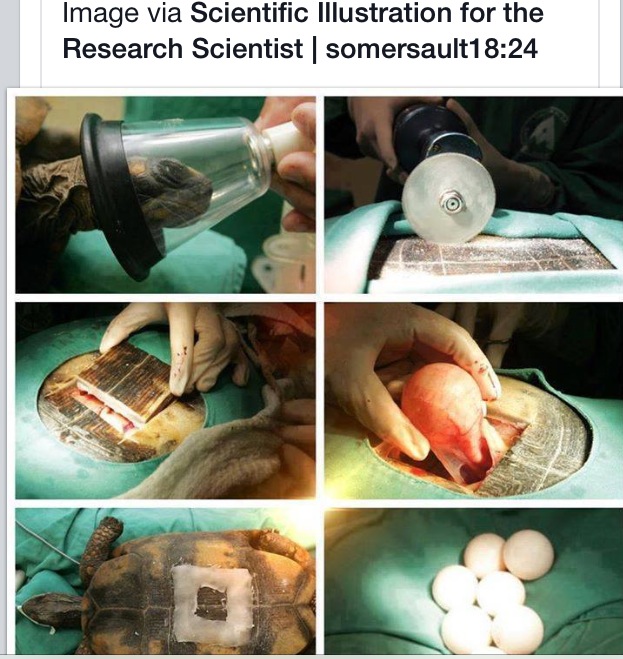
Last week when I was teaching students at the university, some students were amazed that I could take some great images down the microscope, using my iPhone.
But can you make a microscope using your iPhone? You sort of can. One of my colleagues actually built one, following the instructions in the link below.
As a veterinary pathologist, I found the picture quality and the magnification was insufficient to diagnose anything but flukes. You can try it at home and let me know what you think.
Instructions on how to make your own microscope can be found at this link –
http://m.instructables.com/
http://www.digitaljournal.com/article/120714?doredir=0&noredir=1
—
Yours sincerely,
Dr Richmond Loh
DipProjMgt, BSc, BVMS, MPhil (Pathology) Murdoch, MANZCVS (Aquatics& Pathobiology), CertAqV, NATA Signatory.
THE FISH VET, Perth, Western Australia.
Veterinary Medicine for fish.
W: http://www.thefishvet.com.au
E: thefishvet
P: +61 (0)421 822 383
Whoah! Just like in Mission Impossible, when Tom cruise had to run from the wall of water!
—
Yours sincerely,
Dr Richmond Loh
DipProjMgt, BSc, BVMS, MPhil (Pathology) Murdoch, MANZCVS (Aquatics& Pathobiology), CertAqV, NATA Signatory.
THE FISH VET, Perth, Western Australia.
Veterinary Medicine for fish.
W: http://www.thefishvet.com.au
E: thefishvet
P: +61 (0)421 822 383
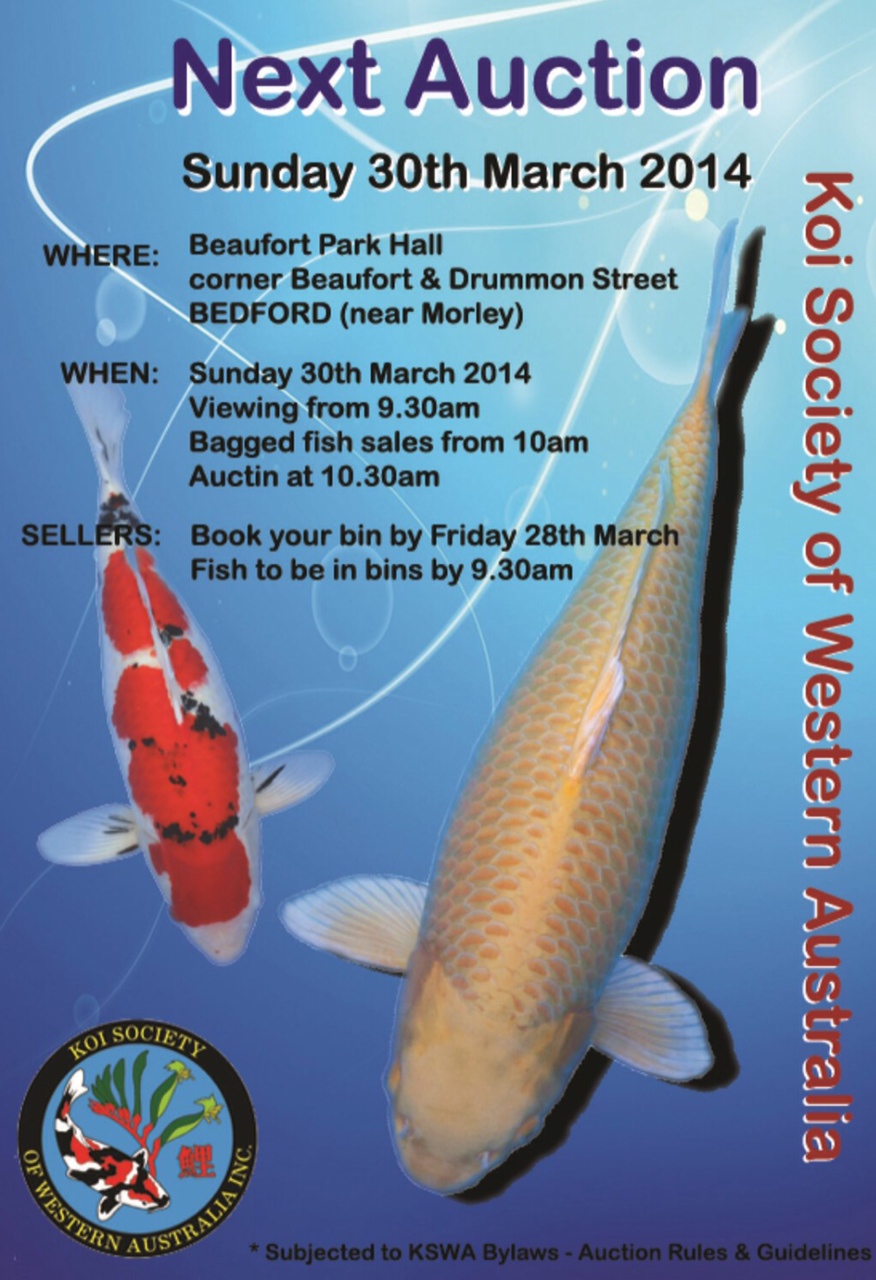
An invitation to the newest World Aquatic Veterinary Medical Association Student Chapter; to accompany me at the next Koi Society of Western Australia’s Auction.
See picture below for details.
Here we will learn a little about the koi industry and get some handling and diagnostic experience.
Meet me there at 9:30am.
See also:
https://m.facebook.com/events/1449646171938450
—
Yours sincerely,
Dr Richmond Loh
DipProjMgt, BSc, BVMS, MPhil (Pathology) Murdoch, MANZCVS (Aquatics& Pathobiology), CertAqV, NATA Signatory.
THE FISH VET, Perth, Western Australia.
Veterinary Medicine for fish.
W: http://www.thefishvet.com.au
E: thefishvet
P: +61 (0)421 822 383
Hi Fishy vets,
One of our colleagues, Dr Pin Needham, is compiling a list of Australian fish vets for the 45th, IAAAM Conference, to be held in Gold Coast this year. He’d like to give attendees the history of fish vetting in Australia.
If you’re dealing with aquatic animals in any form, please email him details of the following:
Please email your responses to Dr Pin Needham: vet@glenside-vet.com.au
Please CC me too as I’m interested: thefishvet@gmail.com
An example:
1. Contact details: Richmond Loh, +61 (0)421 822 383, thefishvet@gmail.com, thefishvet.com.au
2. When you first started working with fish: 2001 as a veterinary fish pathologist in Tasmania’s state Animal Health Labs, principally providing diagnostic services to salmonid, oyster and abalone farmers.
3. What species you deal with: ornamental fish (especially pet koi), pathology, teaching/research (including zebrafish), public aquaria, food fish farm (silver perch and murray cod), abalone.
4. Post-graduate qualifications relating to aquatics: MANZCVS (Aquatic Animal Health), Certified Aquatic Veterinarian (WAVMA).
Follow me on: Facebook "Fin Page" – YouTube – Blog – Linkedin – Twitter
—
Yours sincerely,
Dr Richmond Loh DipProjMgt, BSc, BVMS, MPhil (Pathology) Murdoch, MANZCVS (Aquatics & Pathobiology), CertAqV, NATA Signatory.
Aquatic Veterinarian | Adjunct Lecturer Murdoch University | President WAVMA |
Secretary Aquatic Animal Health Chapter – ANZCVS.
THE FISH VET, Perth, Western Australia, AUSTRALIA. Mobile Aquatic Veterinary Medical & Diagnostic Services.
http://www.thefishvet.com.au
Ph: +61 (0)421 822 383
Skype: thefishvet
Looking for more books? Check out this site.


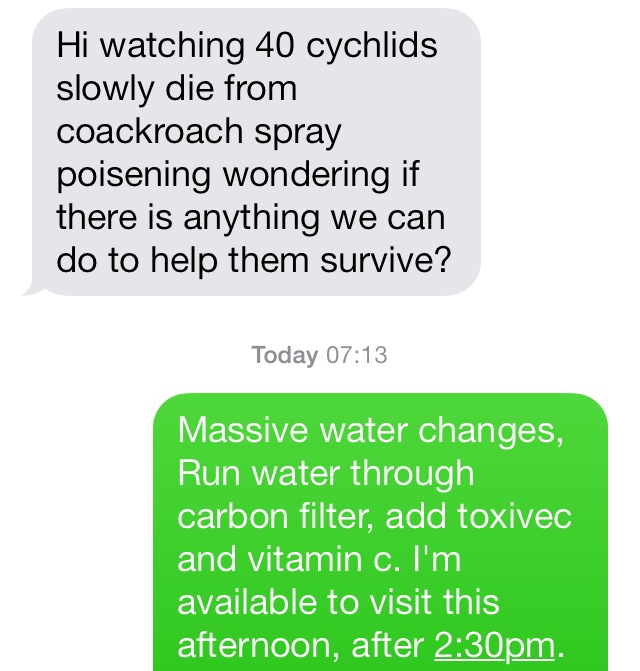
From Facebook.
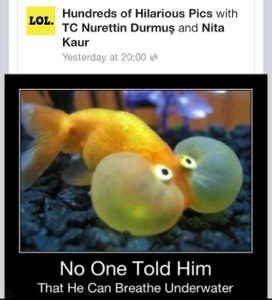
Check out the dialogue pictured below.
—
Yours sincerely,
Dr Richmond Loh
DipProjMgt, BSc, BVMS, MPhil (Pathology) Murdoch, MANZCVS (Aquatics& Pathobiology), CertAqV, NATA Signatory.
THE FISH VET, Perth, Western Australia.
Veterinary Medicine for fish.
W: http://www.thefishvet.com.au
E: thefishvet
P: +61 (0)421 822 383
Below is a post from ProMED (a program of the International Society for Infectious Diseases <http://www.isid.org>)
MYCOBACTERIUM MARINUM – USA: (NEW YORK CITY) CHINATOWN, RAW FISH EXPOSURE
*************************************************************************
Date: Wed 5 Mar 2014
Source: NBC/New York [edited]
New York City is seeing an outbreak of a rare skin infection that comes from handling raw seafood, causing skin lesions, pain, and swelling to the hands and arms and even difficulty moving fingers, officials said.
Health officials are warning those who purchase raw fish and seafood at Chinatowns in Manhattan, Queens, or Brooklyn to wear waterproof gloves when handling those items, and to seek medical care if they discover red bumps on hands or arms.
The bacteria causing the infection are called _Mycobacterium marinum_ and they get into the body through a cut or other injury, the Health Department said. If the infection goes deep enough, surgery may be necessary.
Officials say 30 cases have been identified, and all of those report handling live or raw fish bought at markets in Manhattan, Brooklyn, or Queens.
The infections, which are treated with antibiotics, were reported to the Health Department by doctors, officials said. The Health Department said those who eat seafood from these markets are not at risk.—
_M. marinum_ infection occurs following skin and soft-tissue injuries that are exposed to an aquatic environment or fish. First described as “swimming-pool granuloma”, when swimming pools were not routinely chlorinated, _M. marinum_ skin infections are now most often acquired from aquarium maintenance and called “fish tank granuloma”. The infection usually presents as indolent, localized nodular or ulcerating skin lesions on mainly the upper limb of otherwise healthy people, but can evolve into an ascending lymphangitis that resembles sporotrichosis or can spread to deeper tissues, resulting in tenosynovitis, arthritis, and osteomyelitis.
Rifampin and ethambutol in combination has been reported to be the antibiotics used most often to treat _M. marinum_ infection. Other antibiotic options with reliable activity include clarithromycin, doxycycline, and minocycline. The duration of therapy is at least 3 months and is significantly longer for patients with deeper structure infections than for patients with infections limited to the skin and soft tissue. Most cases of invasive _M. marinum_ infection will also require surgical debridement as an adjunct to antimicrobial treatment.
– Mod.ML
What it could mean for you, and your fishes? Read about it in an excerpt from my publication by clicking this link:
Mycobacteria (Fish Vetting Essentials)