@thefishvet has now 1000 followers!

Yay!


Yours sincerely,

Dr Richmond Loh 

DipProjMgt, BSc, BVMS, MPhil (Pathology), MANZCVS (Aquatics& Pathobiology), CertAqV, NATA Signatory.
THE FISH VET, Perth, Western Australia, AUSTRALIA. 

Mobile Aquatic Veterinary Medical & Diagnostic Services.
http://www.thefishvet.com.au
Ph: +61 (0)421 822 383

Marit Solberg; “We have to farm more fish”

DID you know that…
Although 70% of the planet is ocean, only about 2% of the world’s food supply comes from the seas!

Check this out:
Marit Solberg; “We have to farm more fish”

https://www.linkedin.com/pulse/marit-solberg-we-have-farm-more-fish-salvador-meza
Sent from LinkedIn for Android


Yours sincerely,

Dr Richmond Loh 

DipProjMgt, BSc, BVMS, MPhil (Pathology), MANZCVS (Aquatics& Pathobiology), CertAqV, NATA Signatory.
THE FISH VET, Perth, Western Australia, AUSTRALIA. 

Mobile Aquatic Veterinary Medical & Diagnostic Services.
http://www.thefishvet.com.au
Ph: +61 (0)421 822 383

Sent from my Sony Xperia™ smartphone

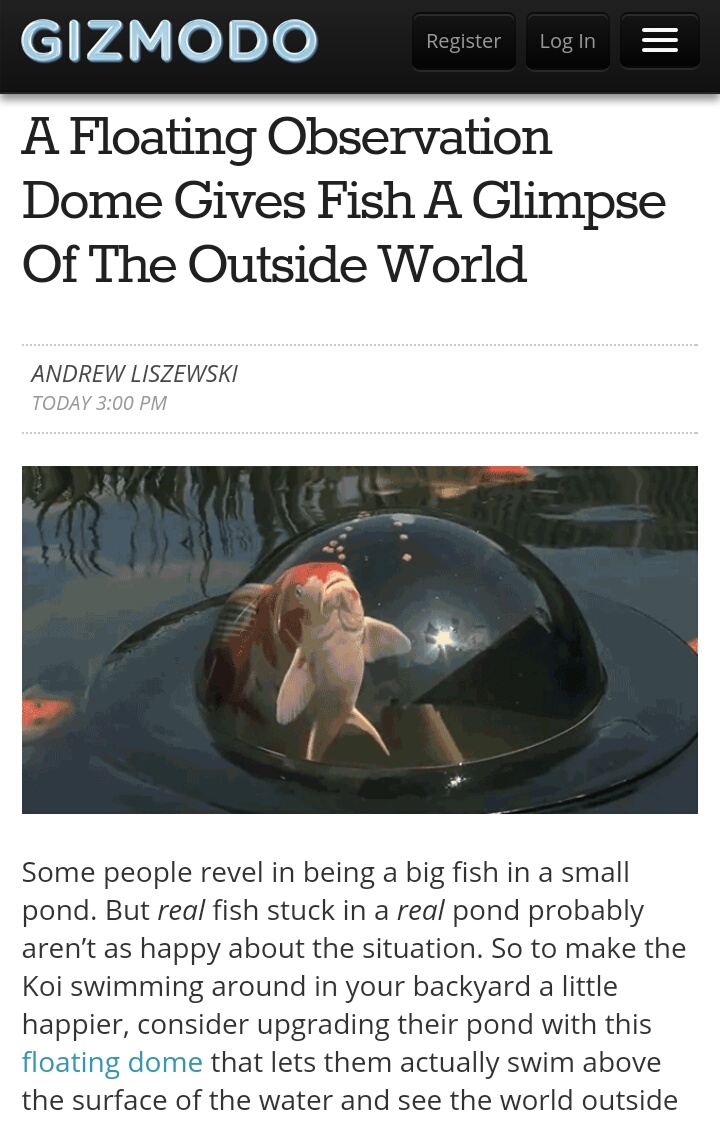
Environmental enrichment for fish – fish dome

Have you ever wanted fish to see you, like you see them?

Check out this nifty idea of a

Floating Observation Dome for Fish!

http://www.gizmodo.com.au/2015/06/a-floating-observation-dome-gives-fish-a-glimpse-of-the-outside-world/


image

What is a fish vet? I’ve never heard of a fish vet before. Are you a doctor for fish?

This is one of many FAQs I get. I often answer with a question, “What do you think is a fish vet?” If you know what a vet is, and what a fish is, just combine them together, and that’s the answer.

“You mean a fish doctor?”

I reply, “Yes, sort of.” And the reason I reply like this is because I’m not a doctor, but better, I am a veterinarian! You see, not all doctors are veterinarians. The practice of diagnosing conditions and treating diseases in animals (including fish) fall under the Acts of Veterinary Science.

There goes the old adage of “Real doctors treat more than one species.”

But an aquatic vet, I’d say, “Real veterinarians treat more than one phylum!”

The next question is ,”What do you have to do, to become a fish vet?”

To be a fish veterinarian, you have to undertake studies to become a veterinarian. Nowadays, this entails enrolling into a veterinary course at a university. The standard veterinary course takes 6 to 7 years to complete, depending on where studies are undertaken. Once you have passed, it enables you to work with pretty much any animal you wish. In this instance, I’ve chosen to work with fish.

Most veterinary courses are a little light on providing students with exposure to aquatic veterinary medicine. And so, most aquatic veterinarians undertake further study to gain the knowledge and skills in order to give their clients the best possible service.

Some of these include:

· short courses such as Aquavet, Marvet, Seavet, etc.,

· examinations (e.g. by the Australian & New Zealand College of Veterinary Scientists)

· private study (e.g. journal articles, books, DVDs)

· attending conferences where aquatic subjects are provided (e.g. AVMA, WSAVA, AVA)

· on-the-job training (pretty much training yourself)

· joining an aquatic veterinary medical association (e.g. WAVMA, FVS, AAFV)

· keeping your own fishes of course (there is no better way to learn, than by doing it yourself)

· and more!

Those veterinarians who’ve spent more than a decade working in the aquatic field, are able to get their knowledge, skills and experience assessed by the WAVMA, and be awarded the post-nominals CertAqV (Certified Aquatic Veterinarian).

If you’d like to learn more, here’s a presentation about “How to become a fish veterinarian. Guidance and resources for aquatic veterinarians.” – see link https://youtu.be/O8g8kL_xsM0

Follow me on: Facebook "Fin Page" YouTube Blog Linkedin Twitter


Yours sincerely,

Dr Richmond Loh
DipProjMgt, BSc, BVMS, MPhil (Pathology), MANZCVS (Aquatics & Pathobiology), CertAqV, CMAVA, NATA Signatory.
THE FISH VET, Perth, Western Australia, AUSTRALIA.
Mobile Aquatic Veterinary Medical & Diagnostic Services.
http://www.thefishvet.com.au
Ph: +61 (0)421 822 383
Skype: thefishvet

President WAVMA 2014

Adjunct Lecturer Murdoch University | Secretary Aquatic Animal Health Chapter – ANZCVS.

Looking for more books? Check out this site.
See advert on YouTube.
Finally! A fish bandage! That works!

Have you ever had to treat skin ulcers in your fish? Or to cover the wound after taking a skin biopsy?

Then you will have encountered the problem that antiseptics (e.g. Betadine) wash off as soon as you put your fish back in the water?

The Fish Vet has found the solution!

USE Powder Gel as a fish bandage, and you can really see the medicine stick to the wound!

Watch how it works –  http://youtu.be/GHJtZRrx8IU

Get it today, because sick fish can’t wait.

Visit http://www.thefishvet.com.au/shop/shopping.html

Great for your emergency kit.

It’s worked on everything (fish and turtles) in freshwater and marine, except for one Wobbegong shark.


Yours sincerely,

Dr Richmond Loh 

DipProjMgt, BSc, BVMS, MPhil (Pathology), MANZCVS (Aquatics& Pathobiology), CertAqV, NATA Signatory.
THE FISH VET, Perth, Western Australia, AUSTRALIA. 

Mobile Aquatic Veterinary Medical & Diagnostic Services.
http://www.thefishvet.com.au
Ph: +61 (0)421 822 383

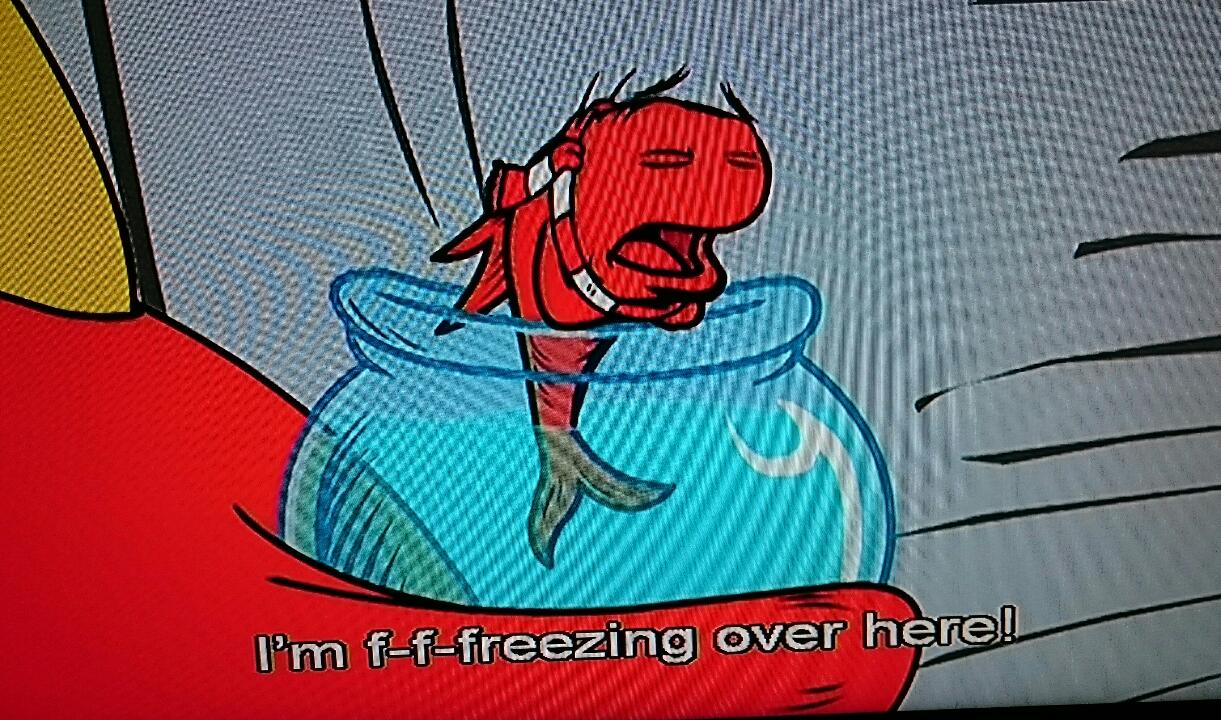
Are your fish freezing?

Have your fish lost their appetite? Have you checked if your heaters are working?

Loss of appetite from incorrect water temperatures are an easy fix.

Tropical fishes like Bettas (see also
https://thefishvet.com/2011/06/05/fighting-fish-over-wintering/) need tropical conditions year round.

If water temperature is not the problem, get TheFishVet out to investigate. It could be a serious disease that could spread.


Yours sincerely,

Dr Richmond Loh 

DipProjMgt, BSc, BVMS, MPhil (Pathology), MANZCVS (Aquatics& Pathobiology), CertAqV, NATA Signatory.
THE FISH VET, Perth, Western Australia, AUSTRALIA. 

Mobile Aquatic Veterinary Medical & Diagnostic Services.
http://www.thefishvet.com.au
Ph: +61 (0)421 822 383