Q: What fish can’t you put in the microwave?
A: Tinfoil barbs!
With thanks to AL.
Have a FINtastic week! R <+>{
All about Fish Vetting – Dr Richmond Loh
Q: What fish can’t you put in the microwave?
A: Tinfoil barbs!
With thanks to AL.
Have a FINtastic week! R <+>{
DIAGNOSIS AND TREATMENT OF OVA RETENTION IN KOI
When an aquaculturist has an itchy head, does he/she have fish lice?
With thanks to AL.
Have a FINtastic week! R <+>{
Q: What fish always has a cold?
A: Runnynose tetra.
With thanks to AL.
Have a FINtastic week! R <+>{
Attention Cichlid keepers,
Husbandry, particularly water quality, can play a pivotal role in many disease processes. As part of a research project attempting to determine the role of water parameters in Hole in the Head disease, Malawi Bloat, or Diarrhoea, Cichlid owners whose fish are affected by these diseases are encouraged to bring a ½ liter (500 mL) water sample to Paul at Morley Aquariums (
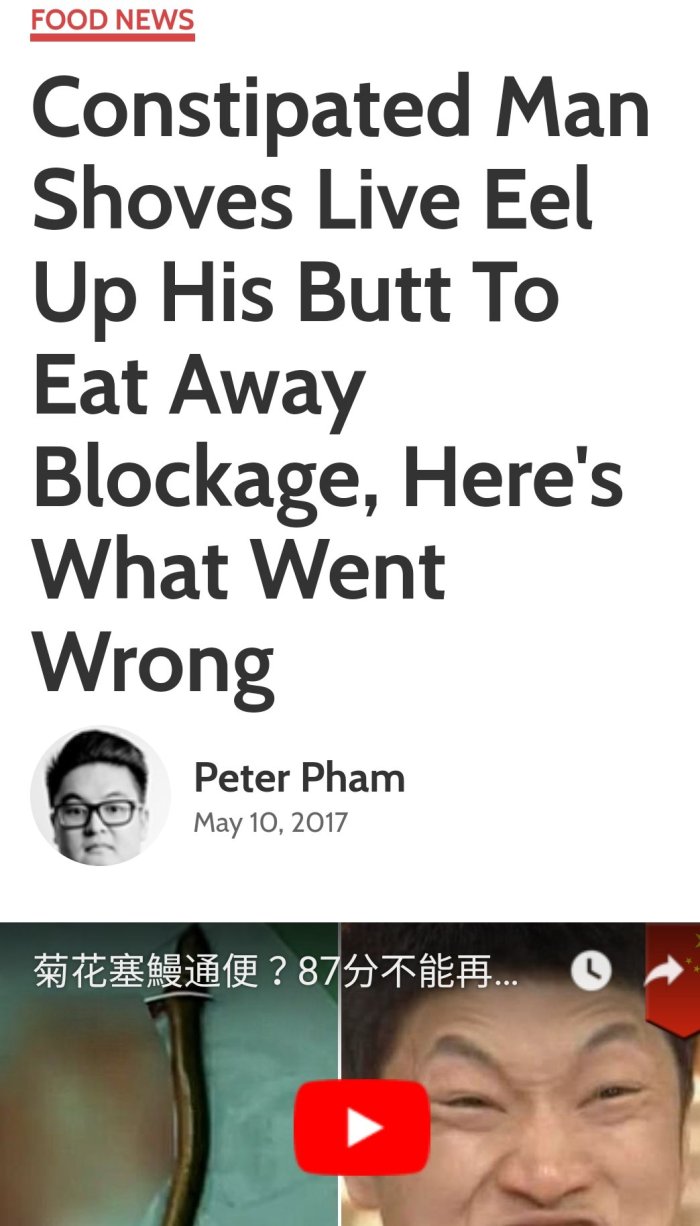
“When your blockage won’t pass, Shove an eel up your ass – That’s a moray….” BM
Read more – https://www.foodbeast.com/news/mister-eel/
Q: A flat starfish has 5 legs by definition. How many chins does a round starfish have?
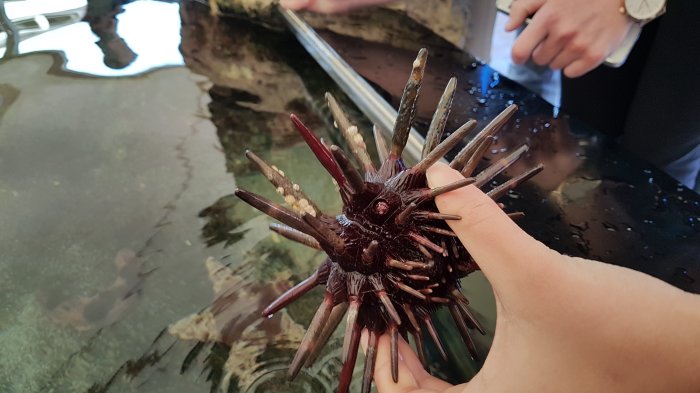
A: One. Because they only have a-chin (urchin).
Have a FINtastic week! R <+>{
In short, there is no treatment for the viral disease. Here’s the latest on the topic, on why…
There is the idea that raising the temperature (to 30°C) might save fish from dying due to KHV (Source link). However, other reports say that raising the water temperature only marginally increases the survival rate, and complicates other matters such as lower dissolved oxygen, increased bacterial and parasitic infections. Moreover, koi that survives the initial KHV exposure likely become carriers of the virus, capable of dying from the disease in future, or pass it to other koi for as long as they live (herpes is for life!).
In the USA, there is an approved attenuated live vaccine for prevention of KHV disease (for fish > 100 g). The vaccine studies are still in their infancy, scientists not having sufficient data to its efficacy and length of protection for vaccinated fish. It is also unknown whether vaccinated fish become carriers of the vaccine strain, or if they are protected against infection by the wild-type strain of virus. Another challenge with regards to the vaccine is that no diagnostic tests are commercially available that can differentiate vaccinated versus naturally infected/exposed fish (Source link).
Since it is a reportable disease in Australia, this means that if your fish test positive, all your fish will need to be culled, and ykur entire system disinfected.
Different strains of common carp have been shown to vary in their level of resistance to KHVD. Survival rates range from approximately 8%, to the most resistant strain being 61‒64% (Source link). So breeding for resistance to KHV may be possible longer term solution (providing there remains sufficient local stocks of koi, since koi imports to Australia is not legal).
Q: Why do Australians eat shark in their fish and chips?
A: Because we love fast food!
Have a FINtastic week! R <+>{