Air dried smears are not exactly the best sample for making a diagnosis, but it can work, especially if there are numerous external parasites and that the smears are prepared correctly.
It’s ideal in situations where the remote site is without a microscope, or someone who knows how to use one, or knows what to look for. The slides can be prepared easily and sent by post to your nearest fish veterinarian to make a diagnosis.
To prepare the smears, simply follow the steps as per taking gill biopsies and skin mucus scrapes, and then smear these onto the glass slide. Do not add any water. Wave the slides in the air until dry.
Check out how the slides are examined and what you can see: http://youtu.be/ghLjcVJgyPA
For added diagnostic advantage, the commonly used Diff Quik stain can be applied to the smears.
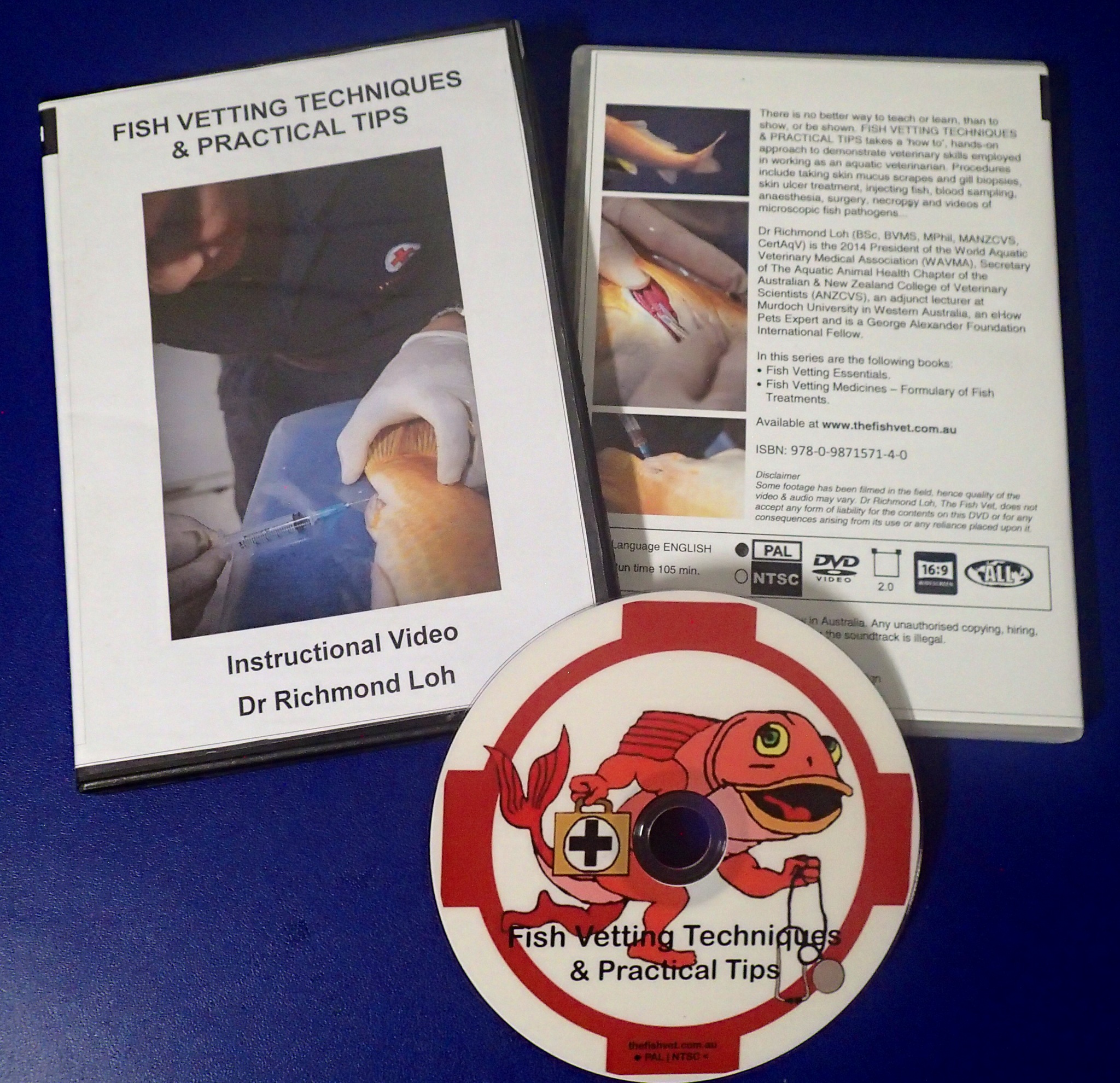
Learn more about Fish Vetting Techniques and Practical Tips in the newly released DVD, available only from the online shop at https://thefishvet.com.au/shop/shopping.html
Follow me on: Facebook "Fin Page" – YouTube – Blog – Linkedin – Twitter
—
Yours sincerely,
Dr Richmond Loh DipProjMgt, BSc, BVMS, MPhil (Pathology), MANZCVS (Aquatics & Pathobiology), CertAqV, CMAVA, NATA Signatory.
Aquatic Veterinarian | Adjunct Lecturer Murdoch University | President WAVMA |
Secretary Aquatic Animal Health Chapter – ANZCVS.
THE FISH VET, Perth, Western Australia, AUSTRALIA. Mobile Aquatic Veterinary Medical & Diagnostic Services.
http://www.thefishvet.com.au
Ph: +61 (0)421 822 383
Skype: thefishvet
Looking for more books? Check out this site.