I received a query from a colleague recently, “How do you handle sampling with house calls? If I do a house call and do scrapings and fin/gill cuttings how do I get the sample and slides to hold overnight to make it to the microscope?”
My response below:
I’ve been making dry preps for viewing neat, and then again, after staining with Diff Quik. Unless they’re packed with bugs, I find the dry preparations unsatisfactory for making a definitive diagnosis.
For purposes of teaching, I’ve come across the Frame Seal Slides (see previous post), but these are preserved in formalin and you’ll miss the main diagnostic feature, which is, motility.
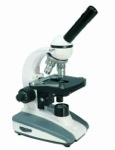
I carry a portable microscope to the site. This way I can make a diagnosis on the spot and provide treatment options straight away. The wet preparations need to be examined within 2-5 minutes so you’ll see the parasites moving.
I’ve spent over ten years, sitting behind a microscope as a veterinary pathologist. I’ve spent thousands of dollars and been through a variety of scopes, trying to find a decent one. I know a good one when I use it. In fact, I liked the one I use so much, now I’m selling the scope myself.
It’s available from my website’s store –
http://thefishvet.com.au
—
Yours sincerely,
Dr Richmond Loh
DipProjMgt, BSc, BVMS, MPhil (Pathology) Murdoch, MANZCVS (Aquatics& Pathobiology), CertAqV, NATA Signatory.
THE FISH VET, Perth, Western Australia.
Veterinary Medicine for fish.
W: http://www.thefishvet.com.au
E: thefishvet@gmail.com
P: +61 (0)421 822 383
