This is an oldie, but a goodie I found when I was doing some electronic filing. I gave my client some homework to do and this is an email report from my client on the progress of the treatment against Cyanobacteria in his fish tank. Enjoy!
R<><
Hi Dr Loh,
Below are some photo’s of before, during and after treatment for the blue green algae.


I started treatment of the tank at around 5pm on Friday. Ammonia and nitrite were 0ppm, nitrate was 5ppm and phosphate 0.25ppm
Naturally, the tank went a little cloudy when the medication was put into the system but then cleared shortly after. In addition to the treatment, I also placed a pad of zeolite into the tanks trickle filter to absorb and ammonia. No adverse reaction was observed in fish. In fact, some fish enjoyed eating what little pieces of erythromycin that had not been fully dissolved!
After a short while, it could be seen the Cyanobacteria was reacting to the erythromycin. It showed up in areas on the glass and on the large thick clumps of cyanobacteria. It began to ‘pull-apart’. It was no longer a smooth appearing surface. This can be seen in the photos below.


The cloudiness of the water then started to increase in the first 2 hours. Twenty-four hours later, I did a water change as per your instructions. As part of this change, I also ensured the gravel had a good clean and removed some plants. The gravel cleaning was successful in getting most of the dead or dying cyanobacteria. What was not removed by siphoning, was removed by hand.
After this change, a test of the water quality was performed. Ammonia and nitrate measured 0ppm. Nitrate at less than 5ppm and phosphate was measured to be 0.50ppm. I added 5ppm of KNO3 to increase the Nitrate to between 5 and 10ppm for the aquarium plants. Below are pictures of the same areas taken after the treatment and clean.
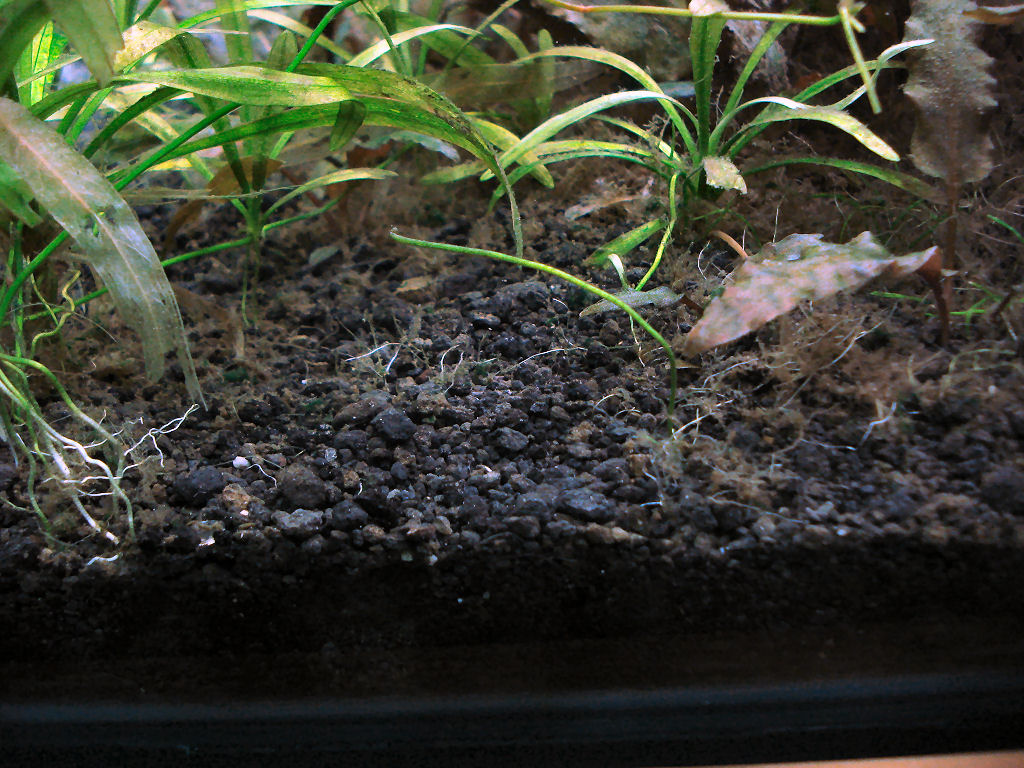
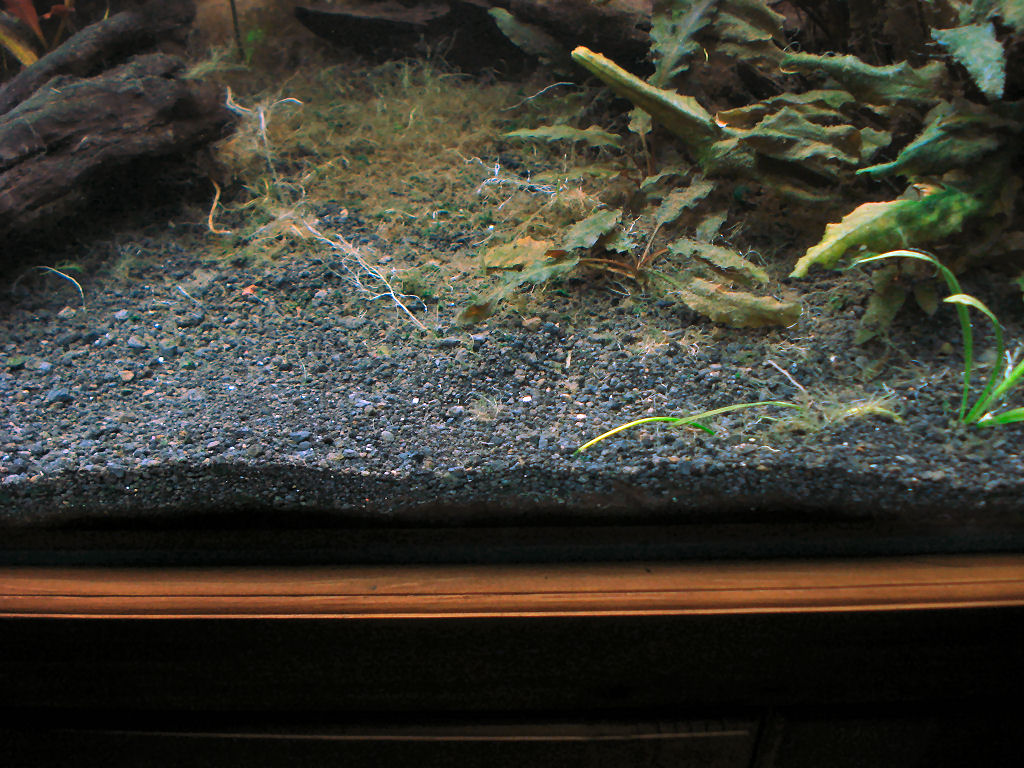
All fish are doing great and never showed any signs of stress or discomfort apart from the large water change, but they are all happy again.
