I get this question a lot, and you’re probably thinking that each time you call yet another fish shop for advice. To their defence, they are trying to help and can only give advice based on the information you provide, and based on their experiences. So it’s not unusual for each shop to offer you different advice.
Sometimes they are given more information, and may even be brought the fish to look at, and water to test. These will bring customers closer to a diagnosis.
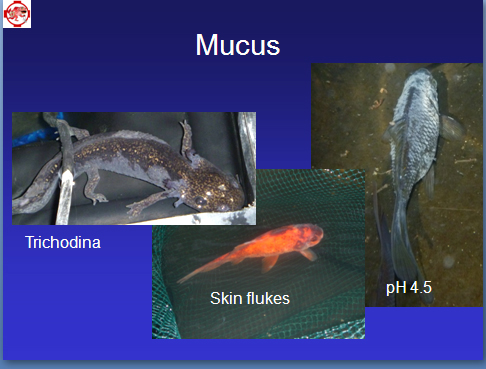
However, for me to make a diagnosis, I’d need to have all that, plus be able to examine the fish by microscopy. If I don’t, do this, I’d just be playing a guessing game. One could make a diagnosis of the low pH in the goldfish pictured on the right, but it’s impossible to definitively tell the client that their axolotl has Trichodina and that they’d need to clean up their water as the primary step and to say that the goldfish in the middle has skin flukes and needs treatment with praziquantel.
I must have evidence to suggest to my clients what’s the next step and we always get the results. There is no short cut to getting the right diagnosis.
In the field, these are the steps I take towards making a diagnosis.
