A question was raised by a colleague about what I thought about probiotics and how they work. Some probiotics work through immunomodulation. If the probiotic works in this manner, I wonder if it might actually cause more stress to the host. Other probiotics work through competitive inhibition but the usefulness of such probiotics during disease outbreaks may be limited since they need to be given time to establish.
I was given a sample of a probiotic to examine a while back. I got my colleague to run a Gram stain on the material. Initial examination showed there were heaps of Gram positive cocci (blue dots) and yeast-like organisms (red peanuts) – see pictured below. The cocci were suspected to be Lactococcus spp.
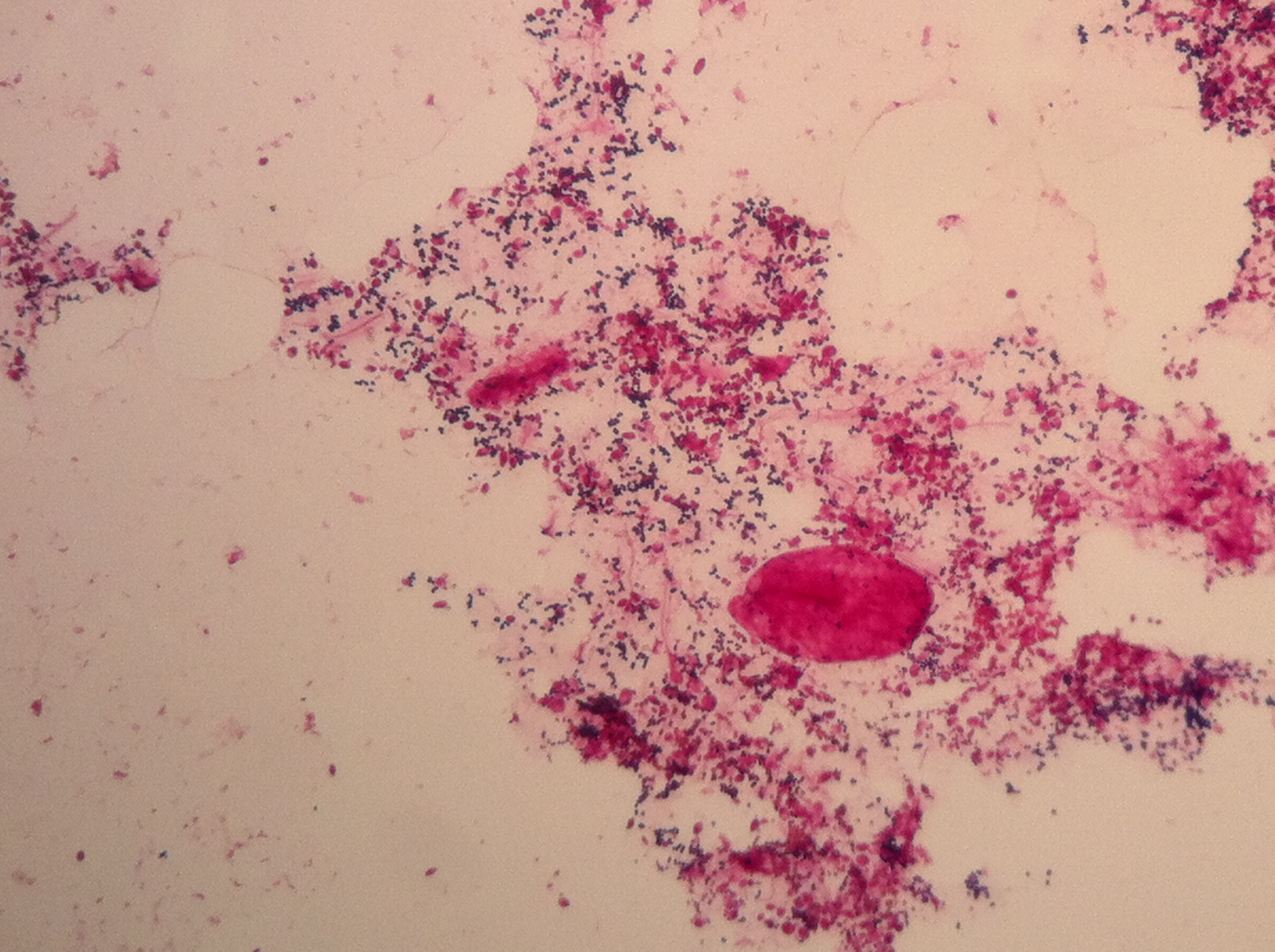
However, after 1 day in broth culture (pictured below), the Gram positive cocci had disappeared and we were left with chains of Gram positive bacilli. The findings suggests that the ‘cocci’ were actually the spores of this long bacteria. Based on the morphology, the long bacterial rods are suspected to be Lactobacillus, similar to what you get on yoghurt!

I think the jury is still out about probiotics. But I guess that in the ornamental fish side of things, the thinking is – “If it causes no harm, it’s OK to give it a try.”
