What did we learn from the lecture?
Different people have different ideas about what constitutes good welfare. These assumptions will influence how we interpret experimental results to form conclusions that can vary.
Animal welfare is a series of double, triple or even quadruple standards where the context of it makes all the difference. For the same animal, the standards will vary greatly depending on whether it is a pet, an experimental animal, farmed, in the wild or is seen as vermin. Mice, rats and rabbits are the best examples of quadruple standards. At one end of the scale, people would spend hundreds of dollars on veterinary bills on a pet rabbit; then people would allow it to be experimented on provided that pain and suffering is minimised as a university experiment; kill them for meat and fur as a farmed animal; allow them to their own devices to fend for themselves in the wild; and trap, poison or even use biological control agents against them to die a slow agonising death as vermin. Same animal type, same human making the call, different standards.
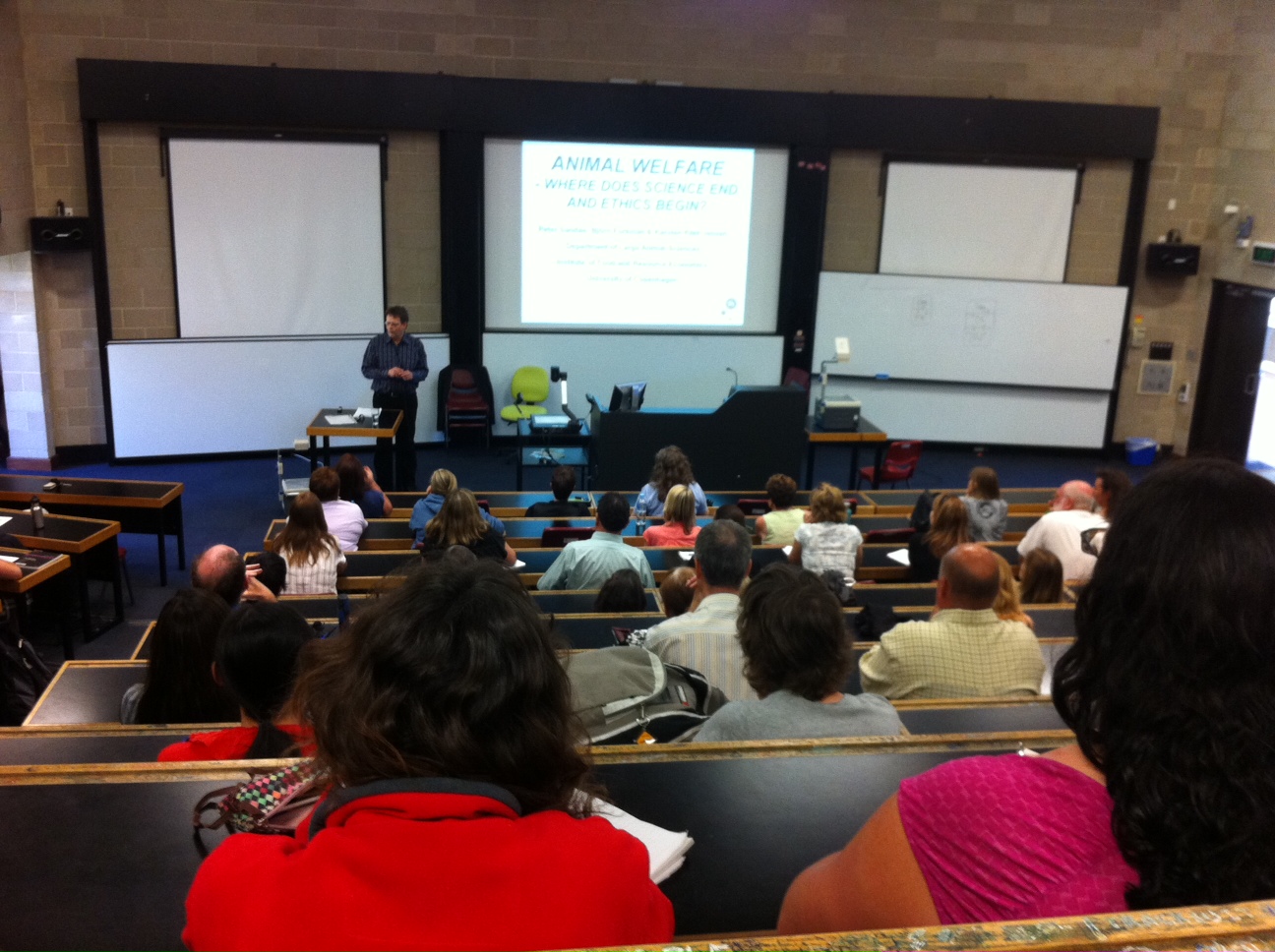
These were just some of the points that Peter Sandoe drew to our attention in the very thought provoking lecture.
