Some might notice that the appetite of their pond fishes are increasing. Be careful to increase feeding at a rate that allows the biofilter to adapt to the increase in feed. Usually, the biofilter lags behind fish’s appetite.
Month: September 2011
Nitrification rate in marine environment
It is only about 25%-50% as efficient as freshwater systems. This is why it is recommended to double the time for new marine tank set-ups. But did you know that you can speed it up by starting the biofilter up as a freshwater system and then when you have a fully cycled biofilter, you can increase the salinity by up to 10ppt/day to the desired level? This will shorten the start up time by up to half!
Very useful for aquaculture setups where time is money.
WA Marine Science Institute Conference
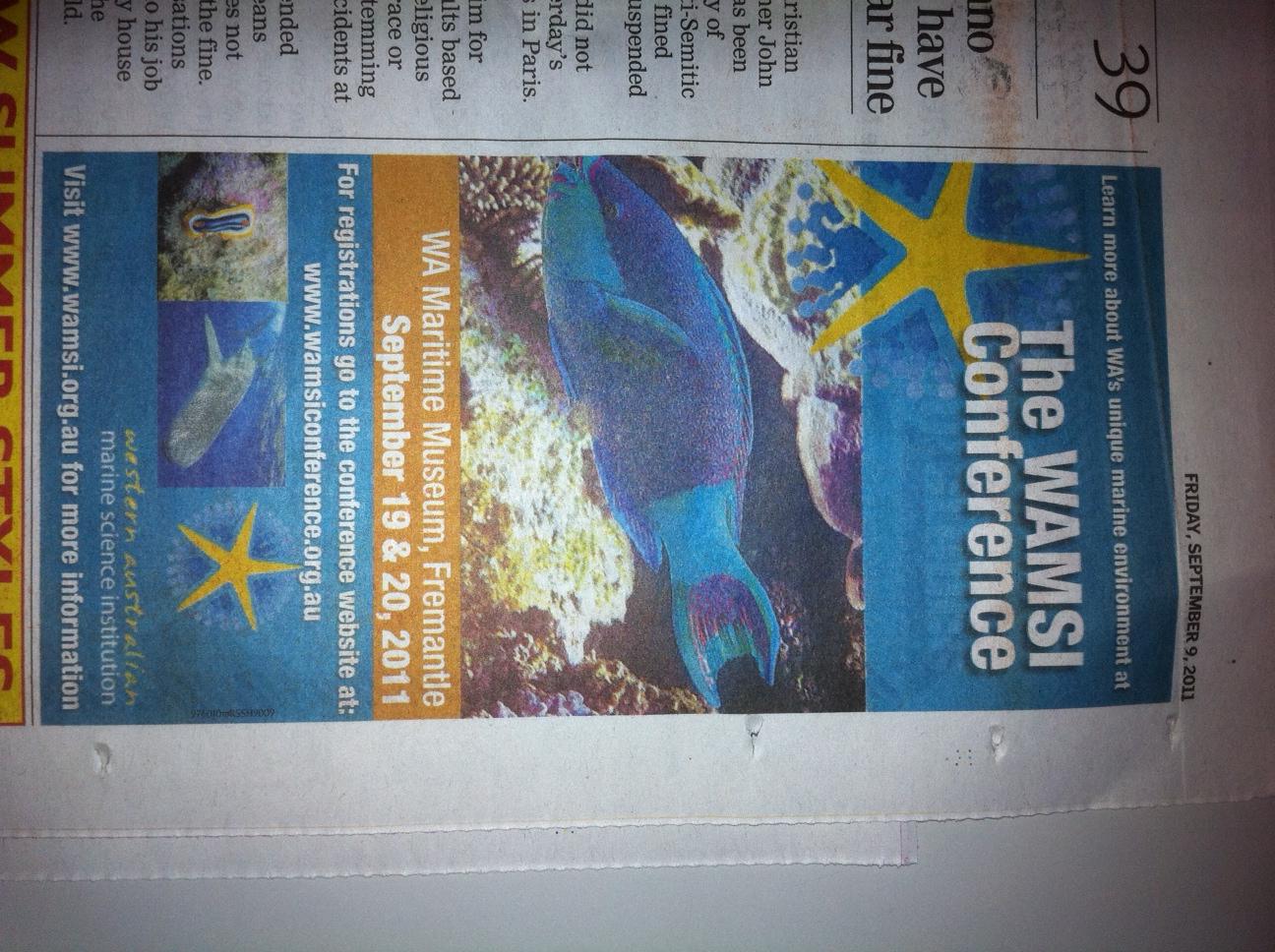
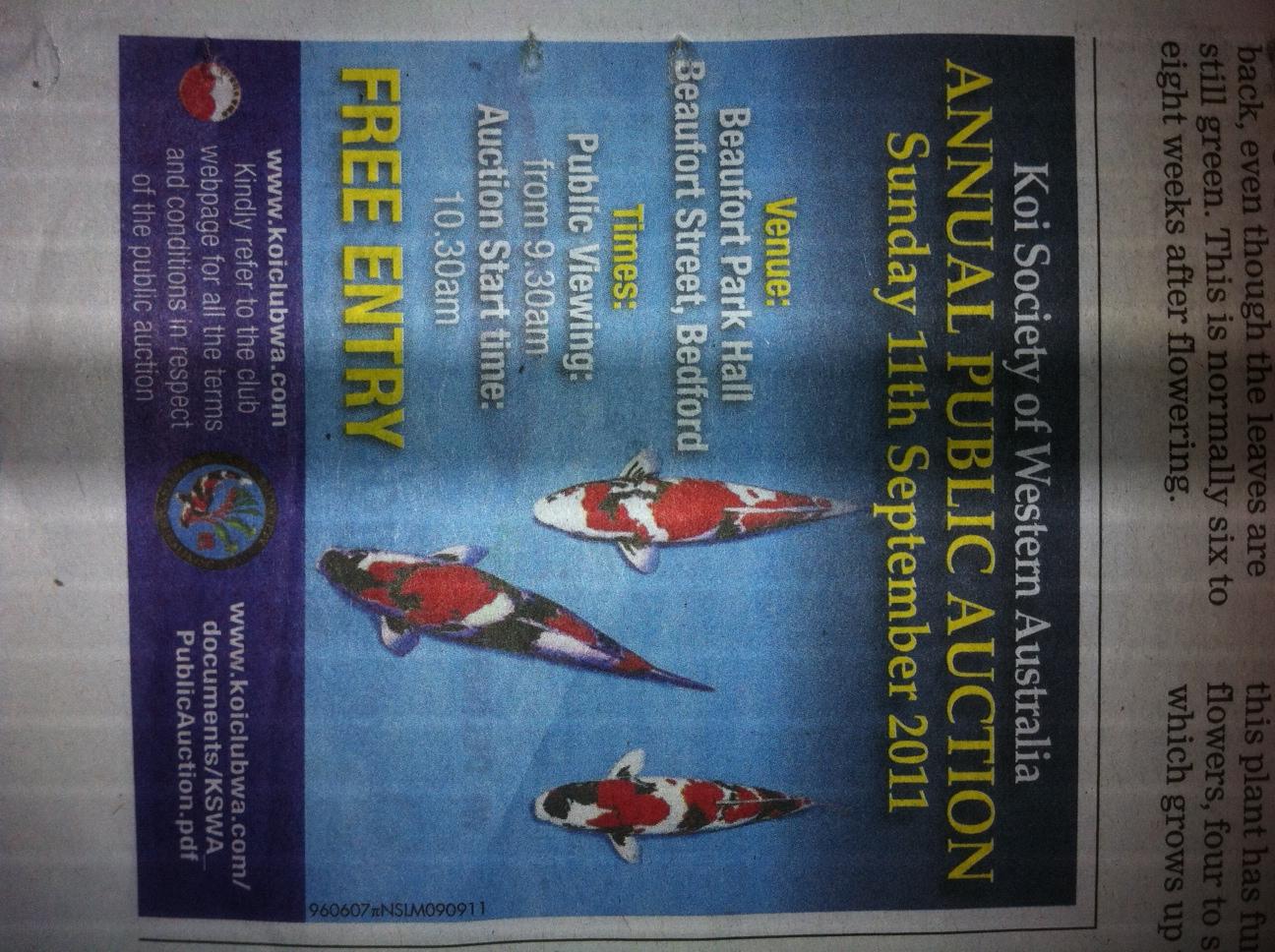
Koi Auction this Sunday
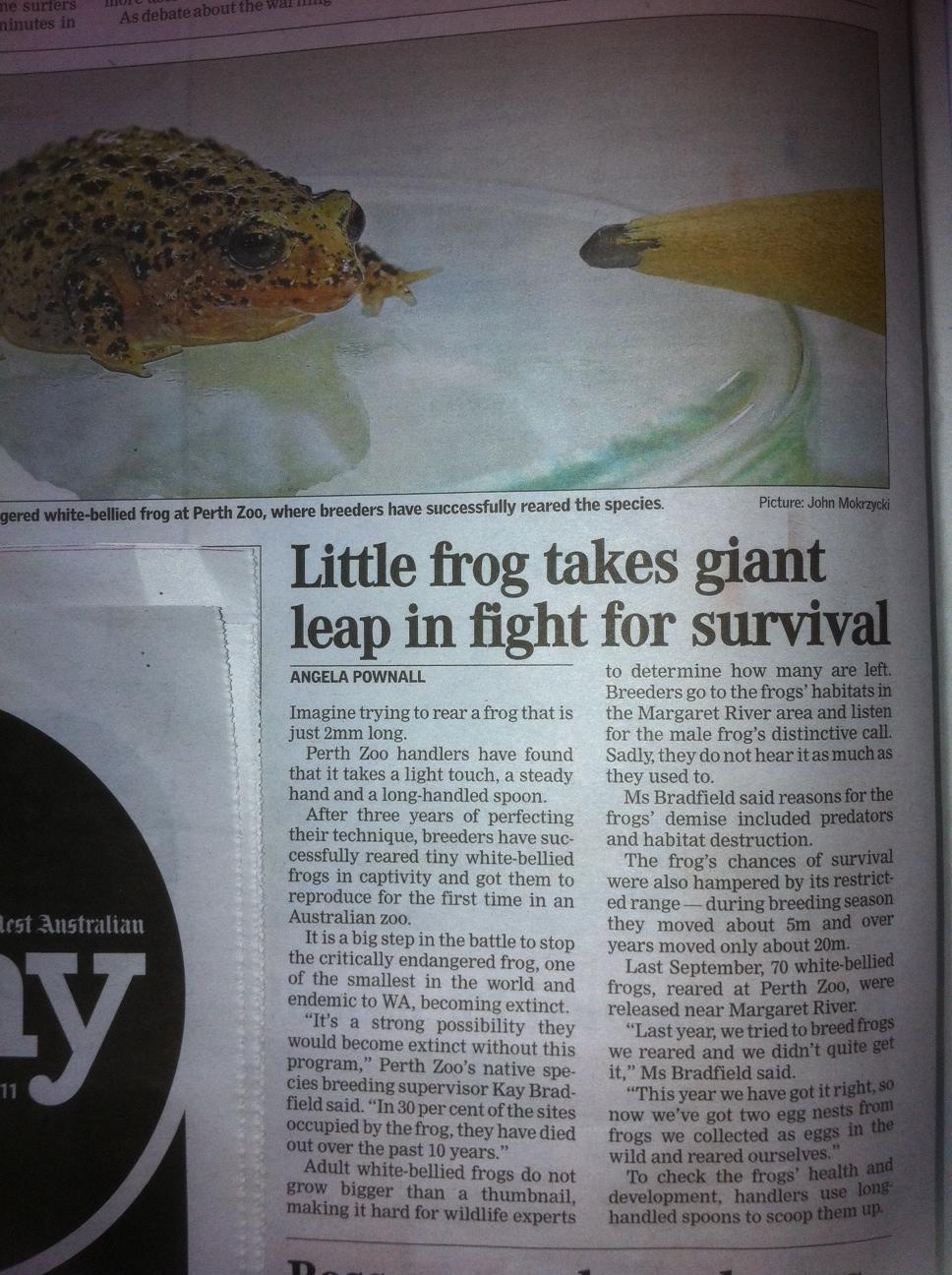
A win for the Endangered white bellied frogs
Australian & New Zealand College of Veterinary Scientists – Aquatic Animal Health Chapter
The Aquatic Animal Health Chapter of the College just had its AGM and yours truly has been nominated to take the post of Secretary.
Are there any veterinarians around the world who are thinking of sitting for the membership exams in 2012. If yes, then please let us know and we can organise mentors/supervisors and examiners.
For those unfamiliar with the ANZCVSc,
The principal objects of the Australian and New Zealand College of Veterinary Scientists are:
- To advance the study of veterinary science and to bring together members of the veterinary profession for their common benefit
- to hold, conduct or arrange examinations of professional proficiency for the purpose of determining qualification for Membership of the College and Fellowship of the College.
The College has a definite brief to encourage veterinarians in practice, in industry, in government employment, and in other fields to seek to improve themselves and to provide additional post-graduate qualifications as a goal.
Membership of the College should signify the following:
"The candidate is expected to demonstrate a high level of interest and competence in a given area of veterinary activity. This is judged by that standard of knowledge and understanding, practical skills, attitude, methodology and communication which would make the person suitable to give professional advice to veterinary colleagues not similarly qualified on problems or procedures often encountered or used in general practice, in the relevant area of veterinary endeavour."
—
Now on: Twitter – Blog – Facebook – Linkedin – Flickr
—
Yours sincerely,
Dr Richmond Loh
BSc BVMS MPhil (Vet Path) MANZCVSc (Aquatics & Pathobiology) DipPM CMAVA Veterinarian / Adjunct Lecturer Murdoch University
The Fish Vet, Perth, Western Australia. Mobile Veterinary Service for fish and other aquatic creatures.
http://www.thefishvet.com.au
Ph: +61 (0)421 822 383
automatic fishing machine….
|
||||||||||||||||||||||||||||||||||||||||||||||||||||||||||||||||||
Evaluation of three types of … floating plastic media … biofilters …
|
||||||||||||||||||||||||||||||||||||||||||||||||||||||||||||||||||
Drink like a fish – part 2
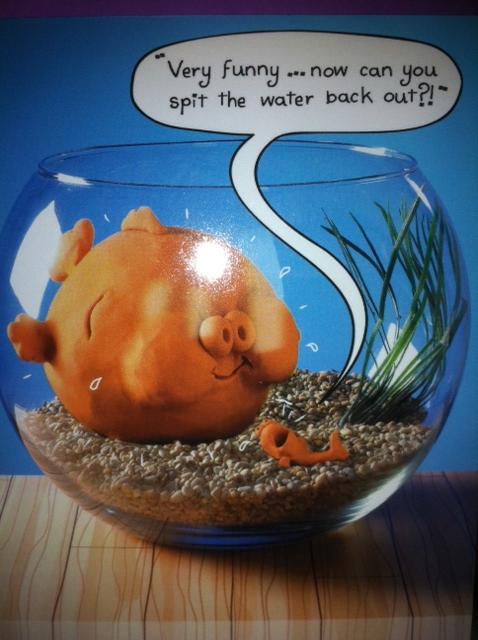
Out of the ark by David Blake.
http://www.inkgroup.com
Soap on a rope as a gift for father’s day
Not a good idea in the fish world according to this greeting card….
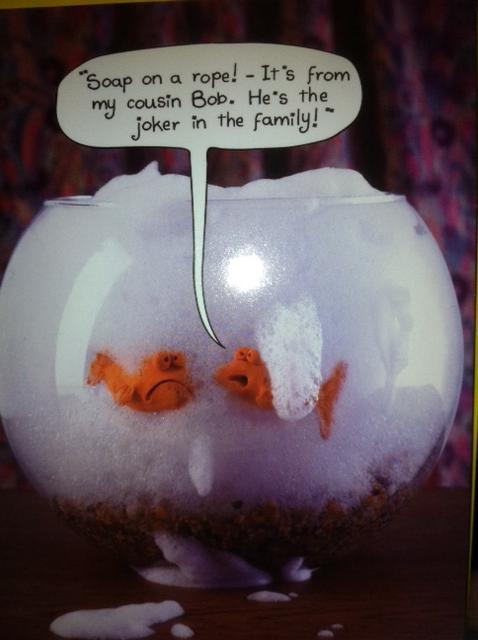
Out of the ark by David Blake.
http://www.inkgroup.com